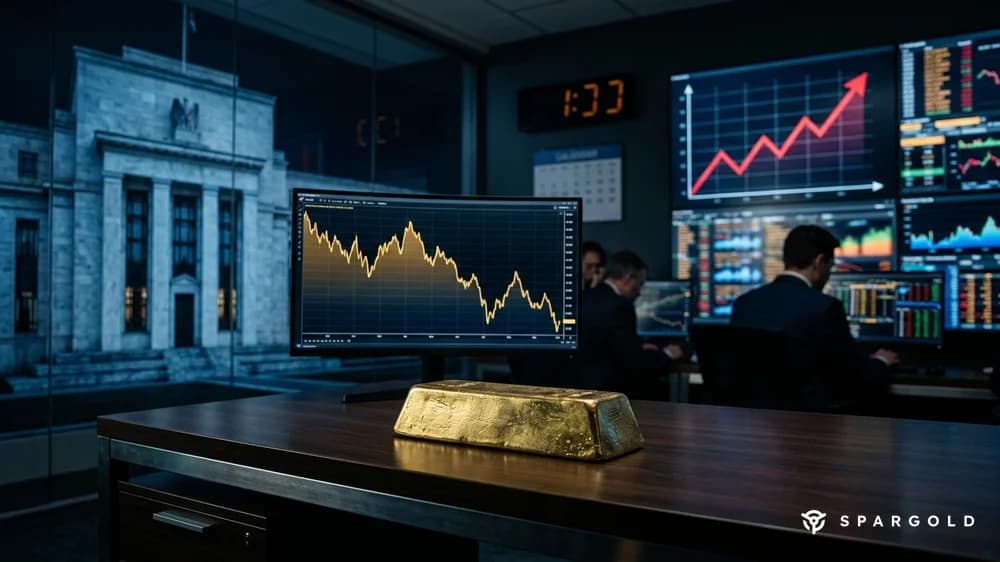
Gold price PCE inflation in focus: Gold is trading at around $4,157 per troy ounce on September 29, 2026 — a seven-week low. On Wednesday, October 1, the US PCE inflation data for August will be released. If the value comes in hotter than the expected 3.2 percent, the probability of a Fed rate hike on October 27 rises to over 70 percent — and gold will come under further pressure.
PCE stands for Personal Consumption Expenditures — meaning personal consumption expenditures. The underlying price index measures inflation from the consumer's perspective and includes more expenditure categories than the better-known Consumer Price Index (CPI). This is precisely why the Federal Reserve prefers the PCE as a benchmark for its monetary policy — the distance from the Fed's 2 percent target determines the pace and extent of future interest rate decisions.
On Wednesday, October 1, 2026, at 2:30 PM CET, the US Department of Commerce will publish the PCE data for August 2026. Economists expect core PCE — which excludes volatile energy and food prices — to have fallen to 3.2 percent year-on-year, down from 3.3 percent in July. Any deviation sets a direct chain reaction in motion: PCE → Fed expectations → interest rates → gold price.
The gold price does not react to inflation per se — but to what inflation indicates about future monetary policy. Specifically: a high PCE value increases the likelihood that the Fed will raise interest rates again in October. Higher interest rates make holding gold, which itself yields no return, more expensive. Rising real interest rates are the only structural headwind for gold.
| PCE Result | Fed Reaction | Gold Price Effect |
|---|---|---|
| Hotter than expected (above 3.3%) | October rate hike more likely | Further pressure — possible test of $4,100 |
| As expected (approx. 3.2%) | No surprise, status quo | Sideways movement around $4,150 |
| Cooler than expected (below 3.1%) | October pause more likely | Recovery potential towards $4,200 to $4,300 |
Gold has corrected by around 17 percent since its all-time high of over $5,000 in early 2026. The current price is barely holding the $4,150 support level. At the same time, the futures market (CME FedWatch Tool) is pricing in a 70.3 percent probability of a Fed rate hike at the meeting on October 27 and 28, 2026. The current key interest rate stands at 3.75 to 4.00 percent — the highest level in more than 20 years.
The 10-year US Treasury yield is trading at around 5.25 percent — near a two-month high. The US Dollar Index is also at a two-month high. Both weigh structurally on gold: a strong dollar makes gold more expensive in other currencies and reduces demand; high bond yields offer a low-risk alternative to non-interest-bearing gold.
PCE Wednesday is not the only date gold investors are keeping an eye on. In the same week, the JOLTS job openings (Tuesday) and the US labor market figures (Nonfarm Payrolls, Friday) will be released. Strong employment data would also support the rate hike thesis — a combined blow from hot PCE and robust jobs could further weigh on gold in the short term.
For investors, this means: September ends with a data marathon. The gold price could swing sharply in either direction. Goldman Sachs maintains its year-end target of $4,900 per troy ounce despite Fed headwinds — as context for the current correction. More on the background logic can be found in the Spargold Glossary on real interest rates and gold prices.
Despite short-term nervousness, the structural gold price drivers remain intact. Global national debt of over $300 trillion, ongoing geopolitical tensions, and inflation levels well above the Fed's target support gold's valuation in the long term. Central banks — particularly from China, India, and the Middle East — continue to buy physical gold on a large scale to reduce their dependence on the dollar. This creates structural support that short-term interest rate movements can only partially undermine.
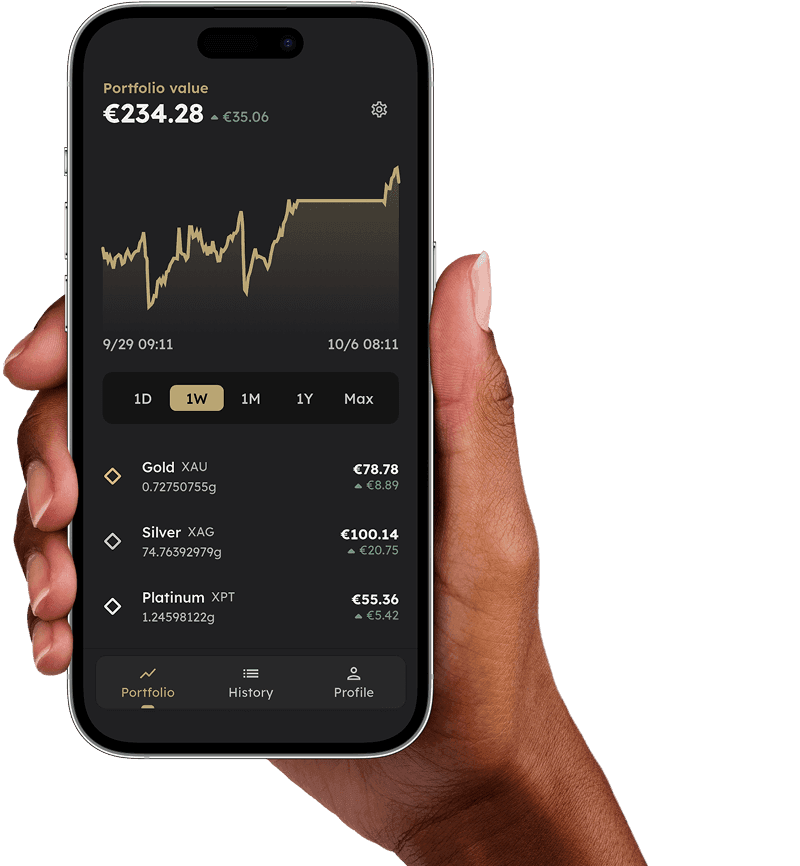
With Spargold, you can invest in physical gold — as a hedge against loss of purchasing power and geopolitical risks, independent of the next PCE data point. More articles in the Spargold Blog.
The PCE Index measures inflation in personal consumption expenditures and is the Fed's preferred measure of inflation. High PCE values increase the likelihood of rate hikes — and since higher interest rates weigh on the gold price, gold reacts directly to every PCE data point.
Gold is under pressure because markets are pricing in a high probability of a Fed rate hike in October. The strong US dollar and high bond yields reinforce this pressure. Wednesday's PCE release will decide whether these expectations increase or subside.
Higher-than-expected PCE data would cause the probability of a rate hike to rise further. This would strengthen the US dollar, raise bond yields, and put the gold price under further pressure — with a possible test of the support at $4,100 per troy ounce.
The next FOMC meeting will take place on October 27 and 28, 2026. This week's PCE data and labor market data will flow directly into the decision.
This article does not constitute investment advice. Investing in precious metals involves risks.