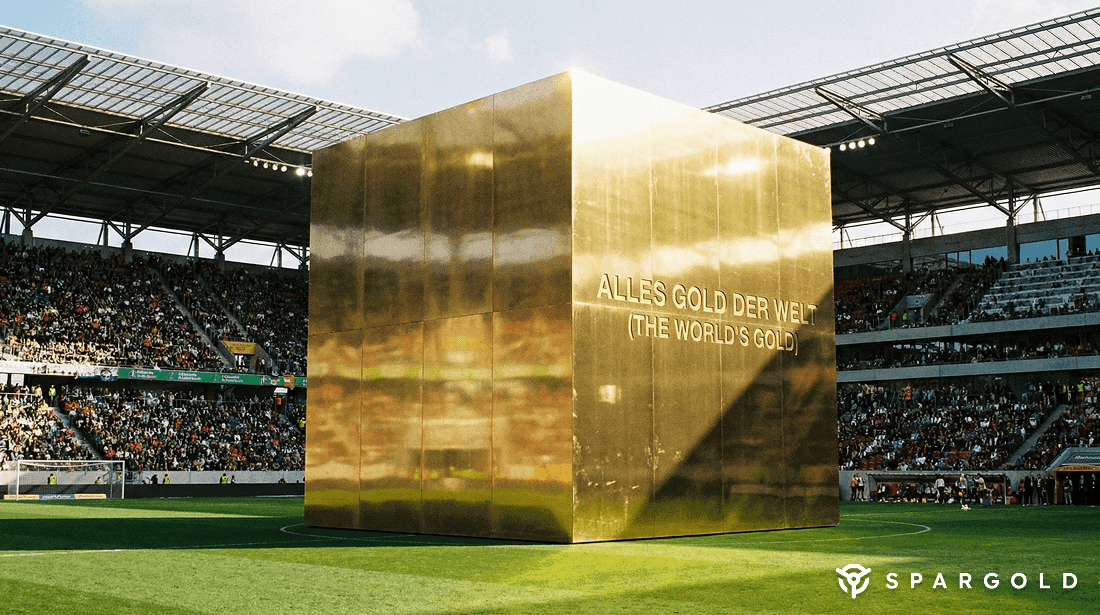
It is January 2026. Gold prices have hit historic highs of over $4,500 per ounce, pushing the metal's total market capitalization to a staggering $31 trillion. But while these financial figures seem astronomical and abstract, the physical reality of gold is surprisingly... compact.
Imagine if we took every wedding ring, every central bank bullion bar, every coin, and every gram of gold from tooth fillings and smartphones ever mined in human history. Imagine melting it all down and pouring this liquid metal into a single solid block. The result is what we call the Gold Cube. And the dimensions of this cube in 2026 will shock you.
Many people believe that the world's gold would fill vast warehouses or cover the floor of the Grand Canyon. Reality, however, proves just how extremely rare this precious metal truly is.
Based on current data from the World Gold Council and annual mining estimates, here is where we stand at the start of 2026:
This cube would fit comfortably on a single tennis court. In height, it roughly corresponds to a 7-story apartment building. That's it. All the gold for which wars were fought, kingdoms founded, and treasuries built fits into this comparatively tiny block.
The reason for this optical illusion lies in gold's extreme density. With a specific gravity of 19.3 g/cm³, gold is one of the heaviest elements in existence.
To put this into perspective:
To better grasp these dimensions, let's compare the Gold Cube to other known objects:
| Comparison Object | Volume / Size | Relation to the Gold Cube |
|---|---|---|
| Olympic Swimming Pool | 2,500 m³ | All the gold in the world would only fill approx. 4.5 swimming pools. |
| Eiffel Tower (Iron structure) | 7,300 tonnes (Metal weight) | The Gold Cube weighs about 30 times as much as the entire Eiffel Tower. |
| Statue of Liberty | 93 meters (Height) | The Gold Cube (22.5m) would only reach up to the statue's knees. |
While the physical size of the cube grows very slowly (mining adds only about 12-15 centimeters to the edge length each year), its monetary value has exploded.
Just a few years ago, we were talking about a value around $12 trillion. Today, in 2026, with prices soaring past $4,760 per ounce, this 22.5-meter cube represents a value of over $31 trillion. That is more than the GDP of the United States or China.
The term "Above-ground stocks" includes all mined gold:
An interesting fact: Gold is virtually indestructible. It doesn't corrode. The gold in your family heirloom ring might have been part of a Roman coin 2,000 years ago. We have been recycling the same cube for millennia.
Visualizing the supply as a single cube drives home one crucial point: Gold is finite. It cannot be printed like Euros or Dollars. It cannot be multiplied by code. If this small cube were divided equally among all 8.2 billion people on Earth, each person would receive just about 26 grams—less than one ounce.
In a world where fiat currencies are losing purchasing power, this cube remains a constant. Do you want to secure your share of these limited 22 meters?
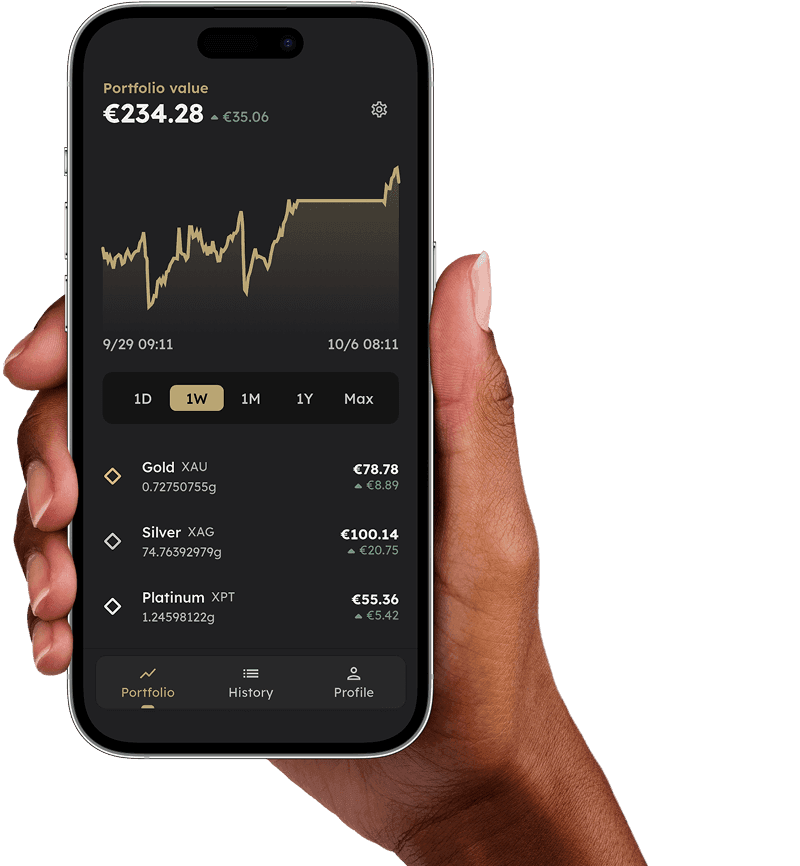
With the Spargold App, owning a piece of the cube is easier than ever. You don't need to store a 12-kilo bar in your living room. We allow you to buy fractions of this global asset—securely allocated, physically backed, and tradeable at any time. Use scarcity to your advantage.
Stay foresightful
Yours, Nils Gregersen