Buying Gold from 5 Euros: How Spargold Makes Physical Precious Metals Accessible

October 6, 2026
5 Euros.
Today, you can hardly pay for a lunch with that.
It is certainly not enough for a classic gold bar.
And yet, you can already start acquiring physical gold with this amount.
The Wilhelmshavener Zeitung is currently reporting on a company from Jever that is pursuing exactly this idea:
The interesting thing about it is not just the low entry amount.
Behind it lies a fundamental question:
Does physical gold actually have to be something only for people with significant wealth?
Anyone who buys a large gold bar usually receives a more favorable price per gram than someone who buys very small units.
This is logical.
Production, packaging, transport, testing, and trading incur costs.
With a small bar, these costs are distributed over significantly less gold.
This leads to a paradoxical effect:
This is not ideal for regular saving.
This is exactly where Spargold comes in.
The principle is different.
Many small investments are bundled.
Spargold buys physical precious metals in larger units.
The individual customer acquires ownership in proportion to their investment.
This means:
Anyone who invests 5 euros will, of course, not have a 5-euro gold bar sent to their home.
They own a corresponding share of actually existing physical precious metal.
According to Spargold, the holdings are kept 100 percent allocated. Spargold
This is where the story becomes international.
Spargold has its corporate headquarters in:
Jever.
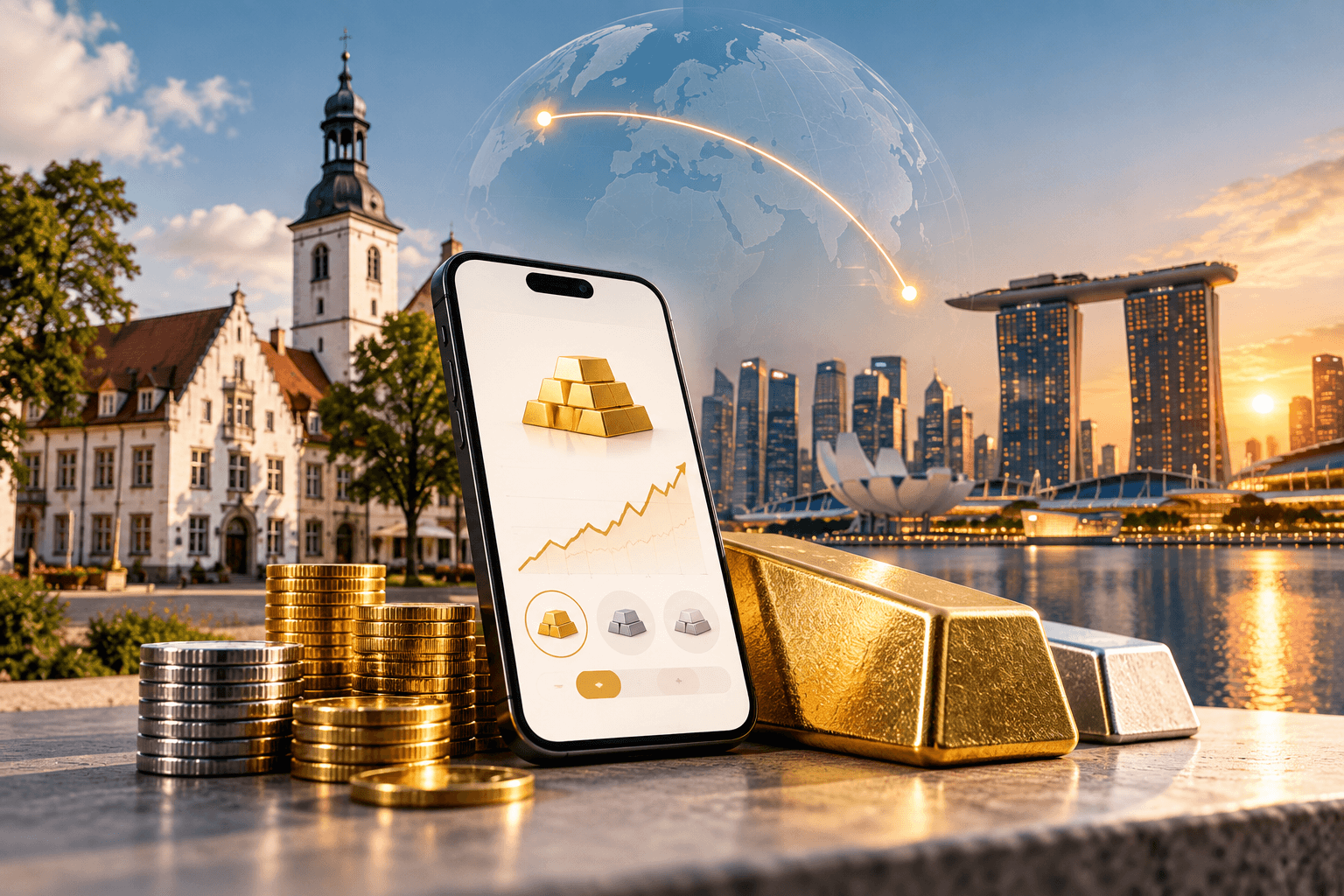
The precious metals, on the other hand, are located around 10,000 kilometers away:
More precisely:
in the high-security vault The Reserve.
Gold, silver, and platinum are professionally stored there.
According to Spargold, the holdings are physically present, insured, and regularly audited. Spargold
Why Singapore?
Because diversification does not necessarily end with the selection of the asset.
It can also encompass the question:
At first glance, certainly.
Gold is probably one of humanity's oldest assets.
An app is among the newest ways to manage wealth.
At Spargold, both worlds meet.
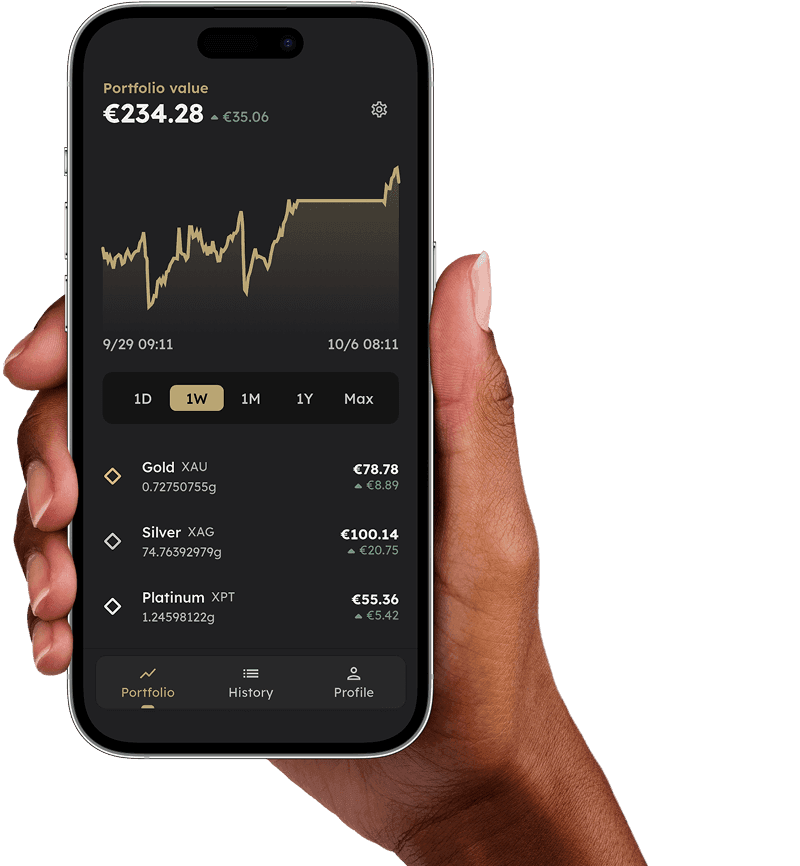
The customer sees their holdings digitally.
They can buy and sell.
They can set up a savings plan.
But behind the digital user interface, there should not be a purely digital gold promise.
But rather:
That is the crucial difference.
This point is important.
The price of gold can rise.
But it can also fall.
Historically, silver sometimes fluctuates even more significantly.
Anyone buying gold today has no guarantee of being able to sell it at a higher price tomorrow or in a year.
Furthermore, gold pays:
no interest.
And:
no dividends.
It is therefore incorrect to equate physical gold with a risk-free investment.
Physical gold is not a claim against a debtor.
A share is a stake in a company.
A bond is a claim.
A bank balance is also legally a claim against a bank.
A physical gold bar, on the other hand, is:
That is exactly why gold has been used for centuries as an instrument of wealth diversification.
Not because its price never falls.
But because it differs structurally from many other financial investments.
This is where it gets even more interesting.
Silver is simultaneously:
a precious metal
and
an industrial metal.
It is used, among other things, in electronics, photovoltaics, automobiles, and numerous electrical applications.
As a result, silver has a different supply and demand structure than gold.
And typically:
Anyone who equates gold and silver therefore overlooks a significant difference.
Perhaps that is where the truly interesting innovation lies.
The idea of regular saving is ancient.
In the past, money went into the piggy bank.
Later into the savings book.
Today, millions of people automate ETF savings plans.
Why shouldn't the same principle also work for physical precious metals?
For example:
5 Euros.
25 Euros.
50 Euros.
100 Euros.
Regularly.
Not as a speculation on next week's gold price.
But as a long-term build-up of an additional wealth component.
The gold bar itself does not become digital as a result.
Only the access to it.
That is a crucial difference.
Because digitalization does not necessarily have to mean that the underlying asset also only exists digitally.
At Spargold, the idea is:
Fintech usually sounds like:
Frankfurt.
Berlin.
London.
Zurich.
Or Singapore.
Spargold, on the other hand, is based:
From there, an app is operated through which customers can buy physical precious metals, which in turn are stored in a high-security vault in Singapore.
The corporate headquarters could hardly be more regional.
The infrastructure could hardly be more international.
Not because 5 euros already guarantee wealth protection.
Of course, they do not.
But because this entry amount removes a psychological and economic barrier.
One does not have to be wealthy first to start building physical precious metal ownership.
That is exactly the idea behind Spargold:
The smartphone takes over the management.
The precious metal remains physical.
And out of a millennia-old form of wealth storage, a modern savings plan is born.
5 Euros are not a fortune.
But they can be a beginning.
Stay farsighted.
Yours,
Helge Peter Ippensen