The Chinese Silver Wall: Export Ban Ends "Involution" and Shocks Global Markets

January 2, 2026
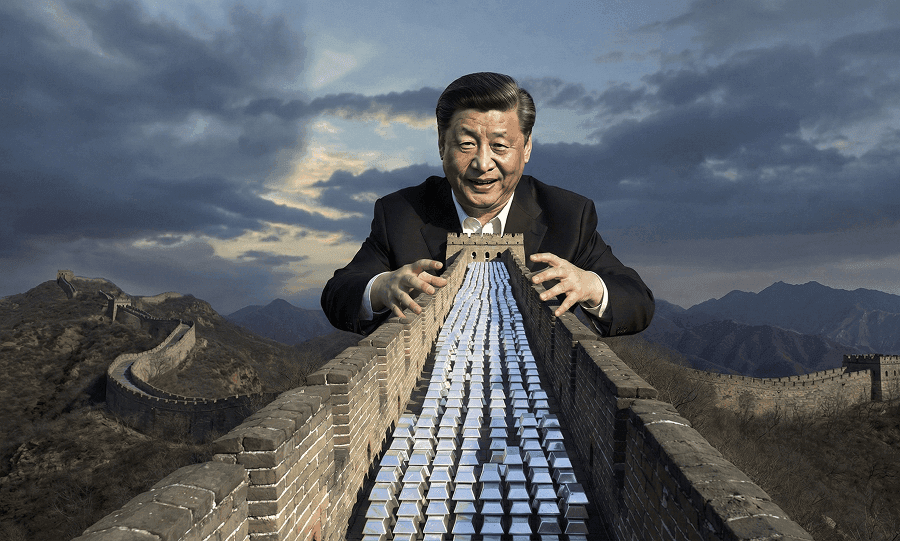
It is January 2, 2026. While Western markets are still recovering from New Year's celebrations, a new reality has dawned in Asia. With yesterday's deadline, January 1, 2026, China has made good on its long-standing threat and erected the "Great Silver Wall."
The new export regulations for strategic metals are now in effect. But contrary to mainstream headlines, this isn't just about resource hoarding. Behind this move lies a deeper economic master plan: The end of "Involution."
China's Ministry of Commerce has officially added silver to the list of "dual-use" items, following the precedent set by Gallium and Germanium. This means:
What many Western analysts miss is the domestic political driver behind this measure. The Chinese government is actively fighting what is known as "Involution" (Chinese: Neijuan).
In recent years, Chinese silver refiners and industrial companies engaged in ruinous competition. To gain market share, they undercut each other's prices, exporting precious metal to the West with razor-thin margins. The result was a paradoxical state: China processed the silver, absorbed the environmental pollution, but delivered the valuable commodity cheaply to Western tech giants and solar manufacturers.
"Beijing has had enough of Chinese companies cannibalizing each other. The new doctrine is: Profitability over Volume. If the West wants our silver, they must pay the true price for it."
Similar to the consolidation in the Electric Vehicle (EV) market, where the state forced inefficient, cheap producers out of the market, the raw materials sector is now being "healed." The era of cheap silver from the East is over.
We are seeing the direct effects immediately on the exchanges. A massive discrepancy is emerging between the physical market in Asia and the "paper market" in the West.
At the SGE in Shanghai, physical metal is traded. Here, real industrial demand dictates the price. Due to the export ban, silver now stays within the country, strengthening the domestic solar and chip industries but drying up the global market.
Here, futures and derivatives dominate—so-called "paper silver." But the inventories at the LBMA and COMEX are bleeding out. With the supply from China cut off, delivery obligations can barely be met.
We are currently witnessing an explosion of the spread (price premium). Physical silver in Shanghai is already trading at a premium of over 12% compared to the theoretical spot price in London. Anyone wanting actual silver must pay the "China Price," not the "Paper Price."
| Exchange | Function | Status 2026 |
|---|---|---|
| SGE (Shanghai) | Physical Trading & Delivery | Sets the global floor price; absorbs metal. |
| LBMA (London) | OTC Trading (Over the Counter) | Inventories at critical lows; delivery bottlenecks. |
| COMEX (New York) | Futures Market | Massive short covering; price decouples from physical reality. |
For the global industry, January 1, 2026, is a "Black Swan" event. The solar industry in Europe and the USA is under particular pressure. China controls a vast portion of refining capacities. Without refined silver from China, the production of photovoltaic modules and high-performance chips is stalling.
Initial reports suggest that major tech corporations are now attempting to buy directly at the SGE and import the metal via circuitous routes—at exorbitant costs.
The Chinese Silver Wall stands. It is the result of a new economic assertiveness that rejects "involution" and prioritizes real value. For investors, this means: The silver price is no longer made in London or New York, but in Shanghai.
In a world where supply chains are weaponized politically and paper contracts at the COMEX may fail to deliver, only what you truly own matters.
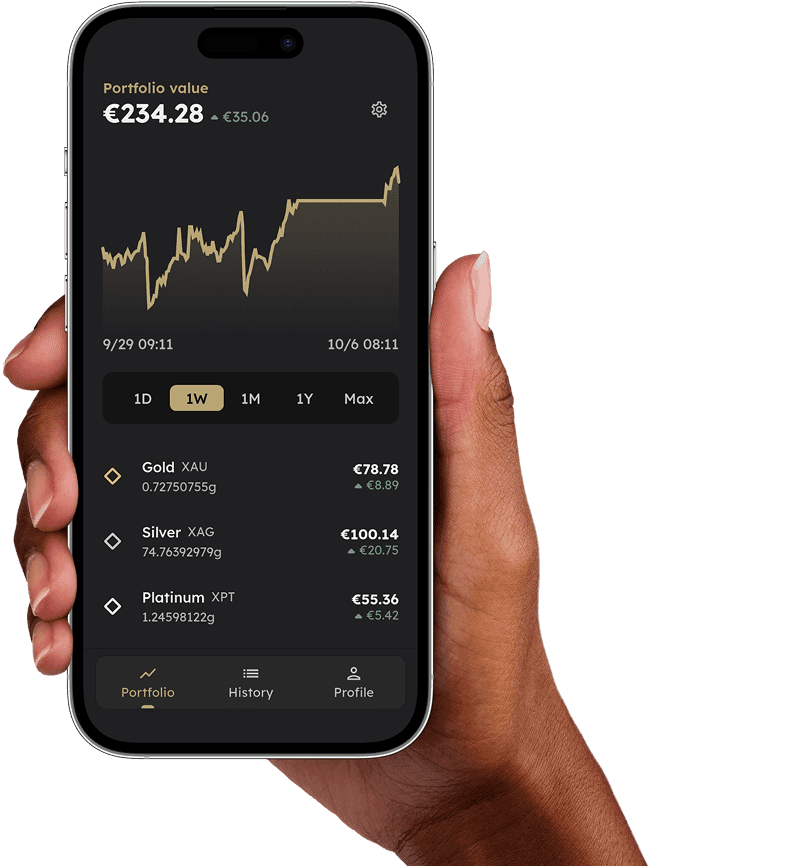
With the Spargold App, you are independent of paper games. We store 100% physical property for you, securely and outside the banking system. Use the current market dislocations to position yourself strategically. When the industry fights for every ounce, you should already have your assets secured.
Stay far-sighted
Yours, Nils Gregersen