Why Tether is Betting Big on Gold – and What It Reveals About the Future of Real Assets

April 6, 2026
Tether is considered a symbol of the digital financial world. It is all the more remarkable that the company is massively expanding its gold strategy: with physical holdings, stakes in gold infrastructure, and a clear portfolio goal. This is more than just a side note from the crypto scene. It is an indication that even digital financial players are once again relying more heavily on real collateral.
In recent years, the debate about the future of money has often been conducted as if the direction were clear: digital, fast, borderless, programmable. In this narrative, gold seemed to many like a relic from an earlier financial world.
This is precisely why the development at Tether is so interesting.
Because, of all companies, one that stands for digital dollar tokens and crypto infrastructure like almost no other is visibly expanding its gold strategy. Reuters reported at the end of January 2026, that Tether holds around 130 tons of physical gold and intends to allocate 10 to 15 percent of its investment portfolio to physical gold. According to Reuters, the company recently even bought around two tons of gold per week.
This is not a casual hedge. This is a strategic capital allocation.
The picture becomes even more revealing when looking deeper. Reuters reported on January 26, 2026, that Tether added around 27 tons of gold to its fund exposure in the fourth quarter of 2025 alone. The same report also stated that the gold-backed token XAUT was backed by 16.2 tons of gold at the end of December 2025.
Tether is therefore not only relying on gold as a product promise for customers. The company is simultaneously developing gold as a strategic asset within its own environment.
In addition, there is another step that is often overlooked: Tether Investments officially announced as early as June 12, 2025, that it had acquired a stake of approximately 31.9 percent in Elemental Altus Royalties, a listed, gold-focused royalty company. Tether explicitly described the move as part of a broader strategy centered around gold, Bitcoin, and hard-asset-backed financial infrastructure.
This makes it clear: this is not just about holding bars. Tether is positioning itself along several levels of the gold value chain:
This is precisely where the true significance lies.
Anyone who believed that the digital financial world would gradually make real collateral redundant is seeing the opposite here. Apparently, even in highly digital financial models, the need for assets that do not just exist as a data set but are physically scarce, globally understood, and historically resilient is growing. This conclusion is an interpretation, but it is clearly supported by Tether's documented capital allocation.
However, it would be too simple to turn this into an uncritical celebratory text about Tether.
Because Tether remains a controversially discussed player. And the accumulation of gold is not proceeding entirely without noise. Reuters reported on March 31, 2026, that Tether dismissed two precious metal traders, previously recruited from HSBC, after only three months. This does not argue against the gold strategy as a whole, but it shows that the operational expansion is apparently not proceeding smoothly.
This is precisely why the development is interesting: not because Tether suddenly stands for perfect transparency, but because even a player with deep roots in the crypto economy is increasingly placing real assets at the center.
For investors, this is an important signal.
Because gold is not treated here as nostalgic crisis protection, but as a modern component of a hybrid financial architecture: digitally accessible, but backed by real assets. And it is precisely at this interface that it is decided which models will gain trust in the long term.
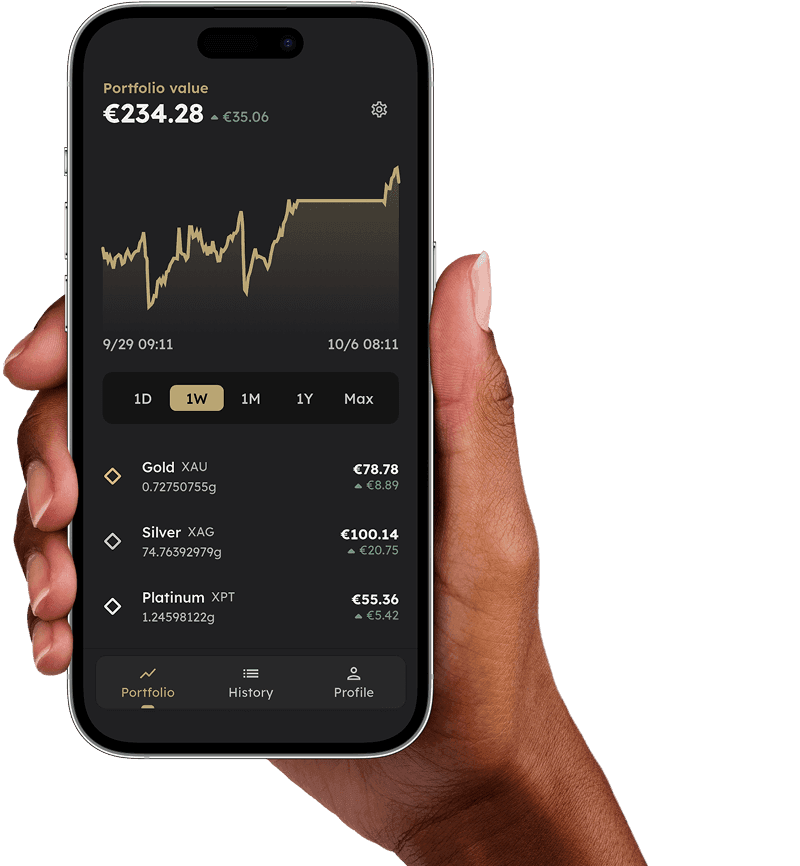
For Spargold, this is a clear confirmation of its own logic: gold today does not have to be inaccessible, cumbersome, or reserved only for wealthy investors. It can be accessed digitally without losing its real substance.
The most exciting question is therefore no longer whether gold fits into the digital world.
The most exciting question is: Which providers are building the most credible bridge between digital access and real value?
Tether has shown with its recent steps that this bridge is strategically relevant. For Spargold, this is not a side note, but an indication of where trust in the financial world is moving: not away from real value, but back to it – just in a new form.
Stay farsighted
Yours, Helge Peter Ippensen