US-Venezuela Conflict Escalation November 2025: How Geopolitical Risks Influence Gold and Oil Prices

November 22, 2025
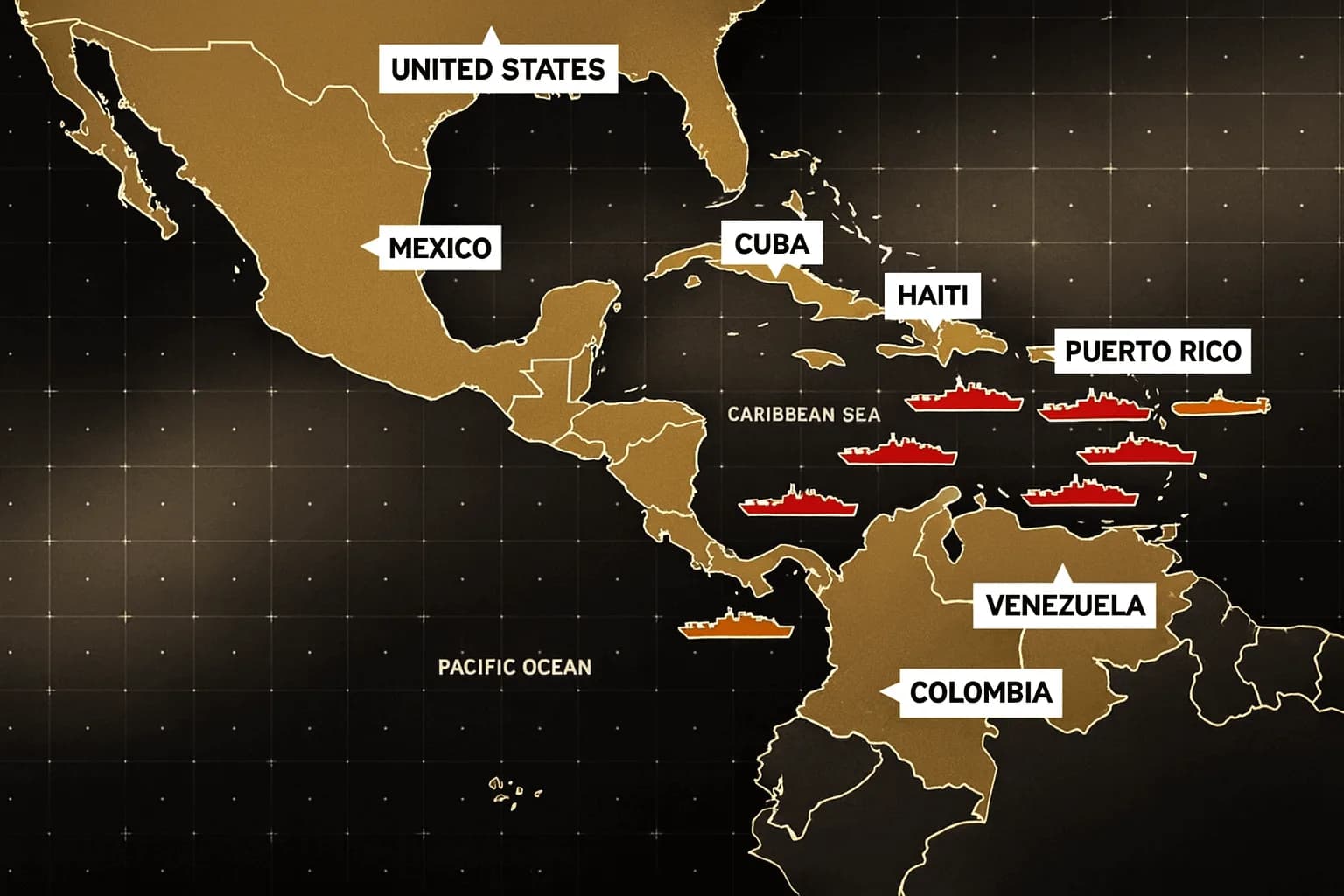
In recent months, the conflict between the USA and Venezuela has developed into one of the most explosive topics in international politics. With military buildups, economic sanctions, and rhetorical escalations, a confrontation looms that could influence not only Latin America but the global economy. This article examines the background, the strategic role of oil, military developments, and the potential impact on commodity markets such as the gold price, silver, stocks, and cryptocurrencies. As precious metal dealers at Spargold, we particularly observe how such uncertainties make safe investments like gold and silver more attractive. Geopolitical conflicts have historically supported the gold price as a safe-haven asset, and the current US-Venezuela conflict could have similar effects.
The conflict is rooted in long-standing tensions. Since 2019, the USA has no longer recognized Nicolás Maduro as the legitimate president and instead supports the opposition. Sanctions have crippled Venezuela's economy, reducing oil production from a former 4.5 million barrels per day to around 1 million barrels. In September 2025, the USA launched Operation "Southern Spear," officially directed against drug trafficking. By November, over 20 vessels were attacked, including with drones, resulting in fatalities and prompting Maduro to initiate a mass mobilization of 200,000 troops and civilians.
Back-channel communications between Washington and Caracas are currently frozen. Maduro has publicly requested talks with Trump, even singing John Lennon's "Imagine." However, the USA demands Maduro's immediate resignation. As of November 24, 2025, the Cartel de los Soles – a network of Venezuelan military personnel and drug traffickers – will be classified as a foreign terrorist organization. This creates a legal basis for targeted US strikes but could also lead to negotiations, as Trump does not rule out military options but also hints at talks. Experts like Frank Mora, former US ambassador, warn: The massive US buildup requires a result, be it a victory or a deal.
A military operation on or shortly after November 24 is conceivable, as the terror designation opens up room for maneuver. Reasons for this would be pressure on Maduro, drug control, and securing oil resources. However, a full invasion is considered unlikely; air or drone strikes to destabilize the regime are more probable. Venezuela is preparing for asymmetric warfare, including guerrilla tactics, to increase costs for the USA. Such escalations typically drive the gold price up as investors seek safe havens – a pattern observed in conflicts such as the Ukraine war.
@ConflictDISP: 🇺🇸🇻🇪 NEW: The US is preparing options for military strikes on drug targets inside Venezuela, NBC reports. Plans reportedly include drone strikes on traffickers and labs, though Trump has not yet approved action. Recent US strikes on Venezuela-linked boats marked an escalation. Washington accuses Maduro of enabling narcotrafficking, while talks continue through Middle Eastern intermediaries, per NBC.
Venezuela hosts the world's largest proven oil reserves with approximately 300 billion barrels – more than Saudi Arabia (266 billion), Canada (171 billion), or Iran (158 billion). Nevertheless, production remains low due to sanctions and mismanagement. Compared to top producers like the USA (13 million barrels/day) or Saudi Arabia (9 million), Venezuela exports only 1 million barrels daily, mainly to China and India.
The strategic development of the oil price in 2025 is characterized by oversupply and weak demand. The EIA forecasts Brent at an average of 69 US dollars per barrel in 2025, falling to 55 dollars in 2026. Geopolitical tensions such as the Venezuela conflict could raise prices in the short term by 10–20% due to supply concerns. In the long term, a regime change could boost production, leading to more favorable prices and strengthening the global economy – lower energy costs for industry and consumers. Historically, conflicts like the Iraq war have temporarily increased prices before new supplies stabilized. Lower oil prices could reduce pressure on the gold price as inflation decreases, but in the short term, uncertainty dominates.
| Country | Oil Reserves (Billion Barrels) |
|---|---|
| Venezuela | 300 |
| Saudi Arabia | 266 |
| Canada | 171 |
| Iran | 158 |
| Iraq | 143 |
| Kuwait | 102 |
| UAE | 98 |
| Russia | 80 |
| Libya | 48 |
| Nigeria | 37 |
This table shows Venezuela's dominance, which makes the conflict an energy battlefield and indirectly influences the gold price.
The conflict goes beyond oil and threatens the stability of Latin America. Maduro is seeking support from Russia, China, and Iran, which could lead to a proxy confrontation. Russia is distracted by Ukraine, China is too far away, but both have investments in Venezuela to protect. A US intervention could increase migration, shift drug trafficking, and test regional alliances such as Brazil or Colombia.
Globally, this weakens the USA if it escalates and strengthens anti-Western alliances. It is reminiscent of the Cold War, with the Caribbean as the setting. For Europe and Asia, it means higher energy insecurity, as Venezuelan heavy oil is essential for refineries. Such global risks make gold a strategic asset, as reports from the World Gold Council show. If the USA brings Venezuelan oil under its control, this could have lasting consequences for the global oil market and also put Russia under significant pressure.
This post summarizes the massive US military buildup:
@tinde_254: BREAKING🚨: Massive U.S. military buildup in and around Venezuela as of 20th November 2025. Gerald R. Ford CSG, 9 air wing squadrons, 248+ Tomahawks on surface ships and Submarines. B-2s, B-1s, F-22s, Reaper drones forward deployed. JASSM, LRASM, expeditionary Marines on standby. This could the heaviest U.S. posture in the Caribbean in decades.
Geopolitical uncertainties drive investors to safe havens. Gold and silver could rise by 10–30%, as in previous crises (e.g., Ukraine war). Gold has already broken records in 2025, with silver following due to industrial demand. At Spargold, we recommend holding precious metals as a buffer, as conflicts like this have historically boosted the gold price.
Stock markets react with volatility: Energy stocks could benefit if prices rise, but indices generally fall due to risks. Crypto markets show mixed effects; in Venezuela, stablecoins are booming as a means of bypassing sanctions, which increases global volatility but promotes adoption.
A regime change could have positive long-term effects: More oil on the market lowers prices, stimulates growth, and dampens inflation. The global economy benefits from cheaper oil, especially industrialized countries, which could reduce the pressure on the gold price as an inflation hedge.
@MarioNawfal: 🇻🇪🇺🇸 AMERICA, AGAIN, EYES VENEZUELA. The Caribbean just got louder. Washington’s quietly mapping new outposts, inching closer to Venezuela under the banner of “regional stability.” No invasion on paper - not yet - but the arsenal says otherwise: AC-130 gunships, F-35Bs, P-8 patrol planes, and warships flexing offshore. Over 10,000 troops already in rotation. That’s not “monitoring.” That’s staging.
This tweet highlights the covert preparations and buildup that amplify market effects.
In summary, the conflict carries the potential for the USA, together with Saudi Arabia, to strongly dominate the global oil market, which in turn leads to a transformation in the geopolitical structure. The resulting uncertainties could represent a catalyst for rising precious metal prices. At Spargold, we advise diversified portfolios with precious metals to navigate uncertainties. The gold price remains a key indicator of geopolitical tensions.
Stay forward-looking
Yours, Nils Gregersen