A historic bombshell is shaking global financial markets: US national debt has officially surpassed the staggering mark of 40 trillion US dollars ($40,000,000,000,000). What may sound like an abstract figure to many investors has tangible and immediate effects on our money, interest rates, and the stability of the global financial system.
The speed at which the US is taking on new debt has reached an unprecedented scale. Within just about ten years, total debt has more than doubled from its previous $19.4 trillion. Since January 2022 alone, the mountain of debt has climbed by another $10 trillion. This development brings drastic consequences:
The situation in the bond markets has recently intensified dramatically. Yields on long-term US government bonds – particularly the key 30-year Treasuries – had climbed to levels above 5.2 to 5.3%. These are highs not seen since 2007.
To prevent a complete loss of control, US Treasury Secretary Scott Bessent felt compelled to take drastic interventions. He massively expanded the government bond buyback program ("Treasury Buybacks"):
Despite the Treasury's interventions, markets remain nervous. Investors and foreign central banks are demanding increasingly higher risk premiums (term premiums) to even consider absorbing the gigantic quantities of newly issued US Treasuries. At the same time, politics lacks fiscal discipline: neither unpopular tax increases nor cuts to social and pension spending are politically feasible, which is why the deficit remains structurally extremely high.
The consequence is a noticeable flight into hard currencies and tangible assets. The fact that the state must now step in as a buyer of its own debt is seen as a clear signal of long-term currency debasement (the Debasement Trade) and is providing a massive boost to assets such as gold or Bitcoin.
The developments in the USA have direct impacts on our financial daily life in Europe:
| Target Group | Key Impacts & Risks |
|---|---|
| Borrowers | High US Treasury yields act as a global interest rate anchor. If they rise permanently, construction financing, corporate loans, and classic consumer loans will also become noticeably more expensive here. |
| Investors (Stocks) | Rising yields on "risk-free" government bonds put particularly high-valued growth and tech stocks under strong valuation pressure. Tangible assets such as commodities and precious metals, on the other hand, benefit from debasement concerns. |
| Savers & Bond Investors | While there are once again more attractive nominal interest rates on fixed-term deposits, overnight money, and bonds, price losses on existing bonds in the event of interest rate hikes and real devaluation through persistent inflation often mean that the bottom-line real yield remains meager. |
When states begin buying up their own gigantic mountains of debt to keep the system running, alarm bells should ring for investors. The continued devaluation of paper money makes real, physical assets indispensable as a fundamental building block in a portfolio.
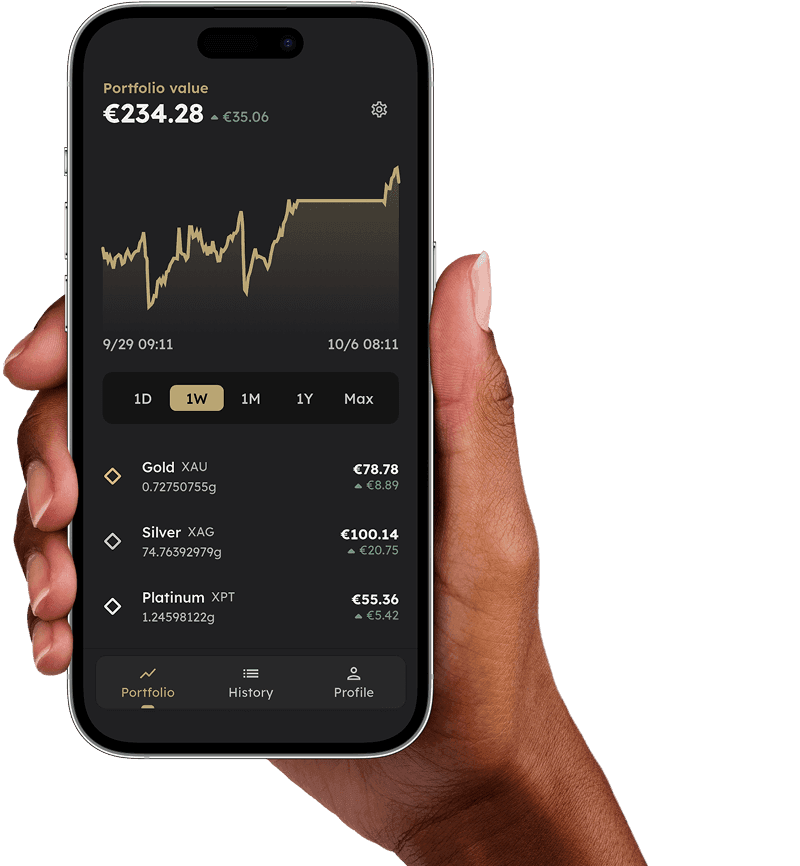
This is exactly where precious metals come into play as a rock in the surf. Do you want to protect your wealth from the global debt whirlpool and creeping inflation? The Spargold App offers you the perfect solution. Secure physical gold and silver easily via smartphone – 100% transparent, absolutely secure, and flexibly tradable at any time. Take precautions today for when paper money loses purchasing power tomorrow.
Stay farsighted
Yours, Nils Gregersen