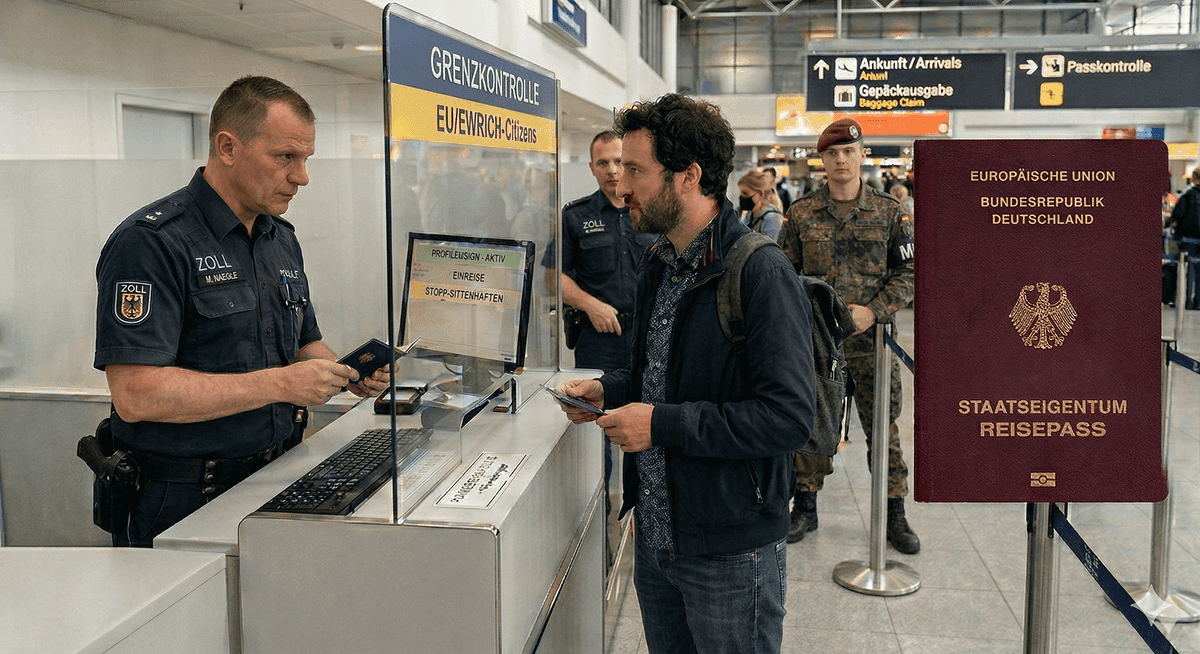
Imagine wanting to leave Germany for a sabbatical, a semester abroad, a long business trip, or simply to spend the winter elsewhere – and first having to obtain permission from the state. What sounds like dark times has become a creeping reality for many citizens in the Federal Republic of Germany since January 1, 2026.
With the new military service law, the federal government has reactivated a regulation that has far-reaching consequences for personal freedom. Since the beginning of 2026: Men between the ages of 17 and 45 must have stays abroad lasting longer than three months approved in advance by the Bundeswehr.
But anyone who believes they are safe from state intervention over the age of 45 is gravely mistaken. The legal framework for compulsory military service and location monitoring is clearly defined:
The primary goal is seamless military registration. The state wants to know at all times where its citizens are reachable. A permit to leave the country can be refused as soon as a call-up for service is imminent. In an emergency, this means the border is effectively closed to you.
The suspicion arises that this measure is only the beginning of a larger transformation of civil rights. Historically, such laws often serve as a trial balloon: how far can the population be restricted before resistance stirs? Once acceptance for the restriction of freedom of movement is established, the next step toward complete state control becomes much easier. It is an experiment on freedom – and those who do not take precautions in time bear the risk.
The travel restriction is just one piece of the mosaic. Throughout Europe, the noose of surveillance, financial control, and restriction of freedom of expression is being tightened, while the tax burden continues to rise. Here is the current roadmap of legislative changes:
| Law / Project | Country / Level | Introduction | Core of the Restriction |
|---|---|---|---|
| Military Service Modernization Act | DE | Jan. 2026 | Permit requirement for stays abroad (> 3 months) for men up to 45 (up to 60 in emergencies). |
| Digital Services Act (DSA) Tightening | EU | Feb. 2026 | Stricter censorship requirements and AI surveillance of social media for "opinion control." |
| EU Asset Register | EU | from March 2026 | Central registration of real estate, accounts, and safe deposit boxes for total transparency. |
| Chat Control (Messenger Surveillance) | EU | April 2026 | Weakening of encryption to allow private messages to be scanned without cause. |
| Central Citizen Register (Tax ID) | DE | Mid-2026 | Linking the Tax ID with almost all areas of life for seamless profile creation. |
| EU Building Directive (Census Expansion) | EU | 2026 / 2027 | Detailed data collection on living conditions in preparation for compulsory climate levies. |
| Cash Limit (€10,000) | EU | Jan. 2027 | Ban on larger cash payments; end of financial privacy for anonymous purchases. |
| Equalization of Burdens / Wealth Tax | DE / EU | planned 2027 | Legal review of one-time levies on private assets to cover state costs. |
| Expanded Militia Duty | AT | planned 2027 | Increased involvement of the reserve and expansion of service obligations in Austria. |
| Digital Euro (CBDC) | EU | approx. 2029 | Programmable central bank money enables the earmarking or blocking of balances. |
Anyone who has their entire capital tied up in Germany – traditionally in real estate and the rest in a bank account – becomes a prisoner in their own country in the event of conflict. Real estate is immobile; you cannot save it from state access.
In the event of unrest, not only does liquidity drop, but so does mobility. If exit restrictions take effect, you are stuck. Those who leave without permission risk the confiscation of the assets left behind. If a state of tension actually occurs, no more permits will be issued. Preparation must happen now.
Financial sovereignty only arises through geographical diversification. When the home state raises the fences higher, a portion of your assets must already lie outside the system. Those who keep savings only within the EU remain defenseless against the reach of the Brussels bureaucracy.
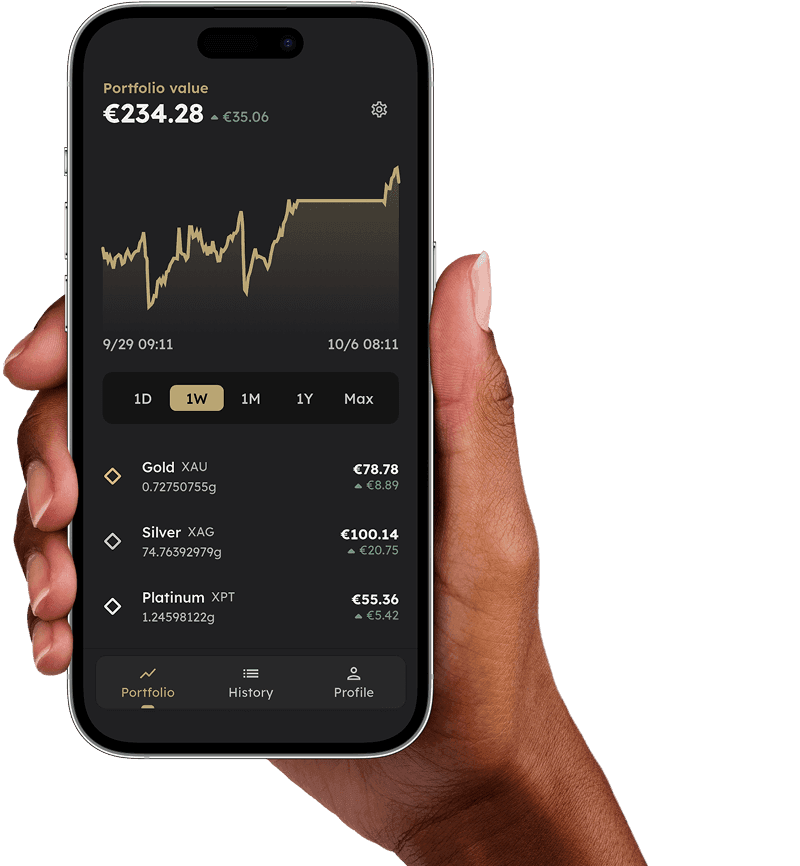
Singapore has established itself as the gold standard for the secure custody of tangible assets. It is located politically and geographically far outside the EU's sphere of influence.
The certainty that a portion of one's assets is safely stored in Asia allows one to sleep much more soundly when civil rights are being curtailed in Europe.
The freedom to travel and to dispose of one's own property is the foundation of any free society. However, exit permits, asset registers, and the restriction of freedom of expression indicate a clear direction. Do not wait until the borders are closed. A Plan B with precious metals outside the EU is no longer an option today, but a necessity for everyone who loves their freedom. Times are becoming rougher and less peaceful; we live in a different reality today than we did 10 years ago. Be prepared.
Yours, Nils Gregersen