Silver on June 8, 2026: Market remains nervous below 70 US Dollars – all eyes on CPI, Dollar, and Yields

June 8, 2026
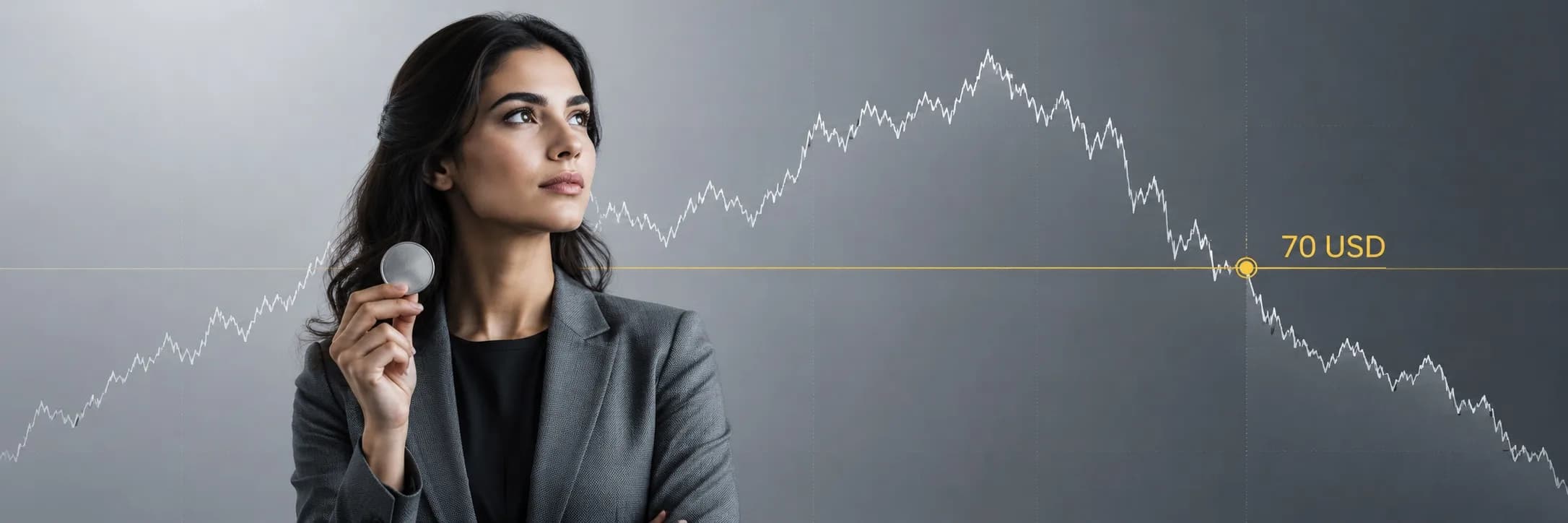
67.28 US Dollars per troy ounce (as of June 8, 2026): Silver continues to trade below the closely watched 70-dollar zone. The daily range is roughly between 66.28 and 68.44 US Dollars. This mark is less about “magic” and more about psychology: in such zones, positioning, stop levels, and headlines converge. This is precisely why movements here often appear larger than they fundamentally need to be at that moment.
The crucial factor in the current situation is that silver is not being driven by silver alone in the short term. The price is currently reacting strongly to macro impulses – particularly US yields, dollar strength, and this week's inflation event.
On June 8, the yield on the 10-year US Treasury note rose to approximately 4.57%. Rising yields increase the opportunity cost of precious metals. This applies to gold – and often even more so to silver, as the market is more volatile and trades more strongly on a “risk-on/risk-off” basis.
At the same time, the dollar remains robust: the US Dollar Index (DXY) is moving around 100.10 to 100.20 points on June 8. A firm dollar is often a headwind for commodities traded in dollars, as silver becomes more expensive for buyers outside the dollar zone.
An additional factor is the geopolitical risk situation: reports of renewed tensions in the Middle East typically support “safe-haven trades” in the dollar, while higher oil prices can reignite inflation concerns. It is precisely this combination that can lead to more fluctuations in the short term without necessarily changing the medium-term silver story immediately.
The date on which much of this week's focus converges is clear: the US Consumer Price Index (CPI) for May 2026 will be released on June 10, 2026, at 8:30 AM ET. In a phase where yields and the dollar are already strained, it is not so much the existence of the figure that matters, but the direction of the market reaction following it. Surprises can quickly move yields and the DXY – and thus “shake up” silver in both directions.
The question of another sharp setback is understandable, as silver is currently trading in a technically and psychologically sensitive range. At the same time, recent months have shown how quickly silver can do both: fall impulsively and turn around just as impulsively. Therefore, it is more professional not to “guess” a percentage figure, but to observe the drivers that trigger such movements.
The three most relevant pacemakers for the coming days can be summarized in a sober snapshot:
| Factor | Current reference value (June 8, 2026) | Why this matters for silver |
|---|---|---|
| Silver Spot | approx. 67.28 USD per ounce (daily low 66.28, daily high 68.44) | Zone below 70 USD is technically/psychologically sensitive |
| US 10Y Yield | approx. 4.57% | Higher yields weigh on precious metals via opportunity costs |
| US Dollar Index (DXY) | approx. 100.11 | Dollar strength often has a dampening effect on commodity prices |
| US CPI (May) | June 10, 2026, 8:30 ET | Data impulse can move yields/dollar significantly |
While the macro wave dominates in the short term, an argument remains in the background that can repeatedly stabilize silver: the deficit narrative. Reuters reported, citing the Silver Institute/Metals Focus, that another deficit year is expected for 2026 (with a cited magnitude of 46.3 million ounces). This is not a price guarantee, but it explains why silver often quickly finds a “bid” again despite corrections as soon as the macro pressure eases.
Anyone assessing silver this week should try less to guess the exact turning point and more to understand the sequence: first the dollar moves, then yields, then metals react. If the CPI on June 10 pulls yields upward and the dollar remains firm at the same time, this increases the pressure. If the CPI dampens interest rate expectations, the mere easing of these two headwinds is often enough to stabilize or turn silver.
The key takeaway for the moment is: It is not the headline that moves silver – but the underlying financial conditions.
Stay farsighted
Yours, Helge Peter Ippensen