Georgia and the EU: Why Tbilisi is Pausing Accession Talks Until 2028 – and Why Investors are Watching Closely

July 21, 2026
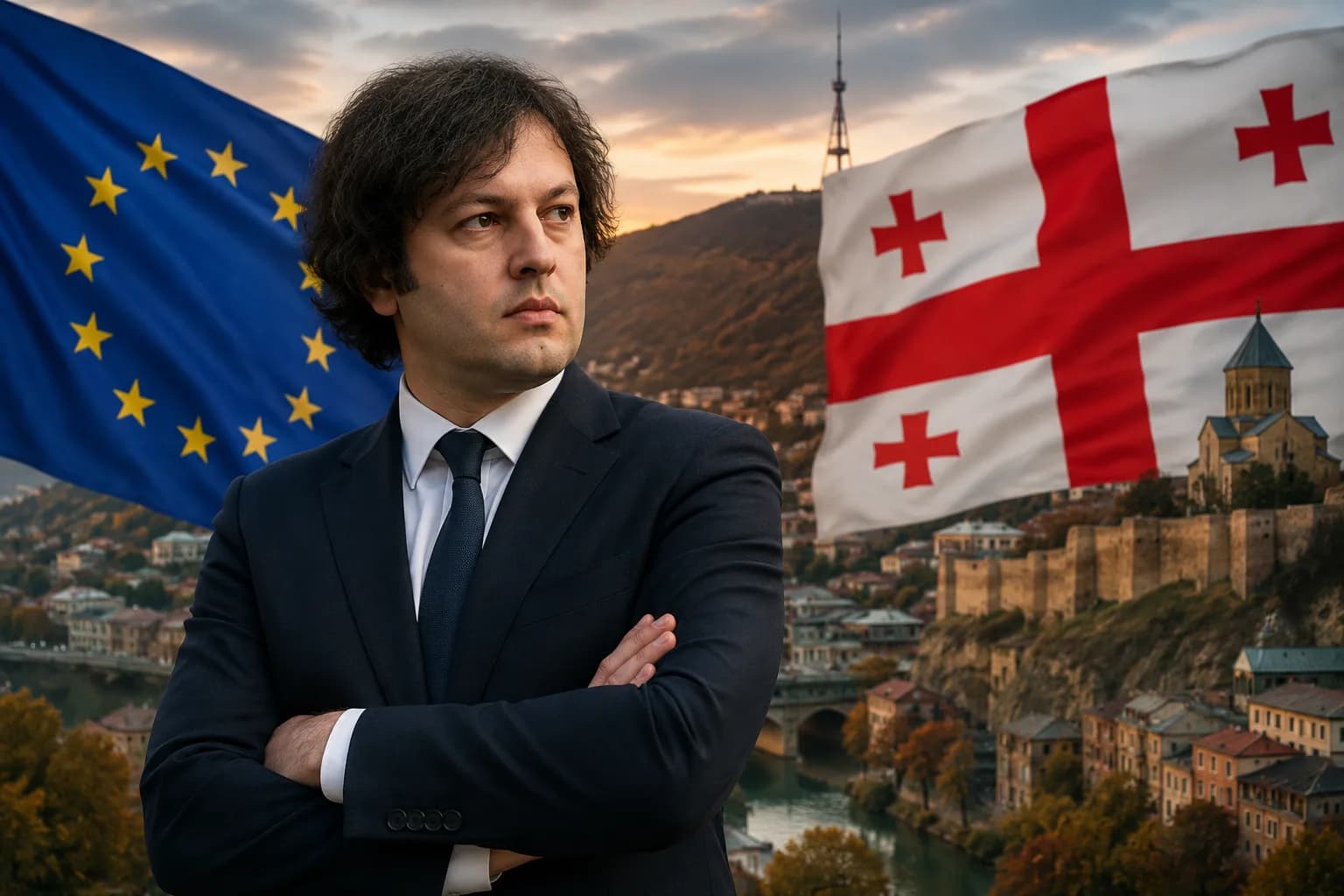
The decision by the Georgian government not to conduct EU accession talks until the end of 2028 continues to spark discussion. While Brussels views the move as a setback for the European integration process, the government in Tbilisi argues that economic stability and national sovereignty currently take priority. The debate illustrates how differently political and economic interests can be evaluated.
For investors and entrepreneurs, a sober look at the facts is worthwhile. Regardless of the political assessment, Georgia has established itself as an economically dynamic location in recent years. Low corporate taxes, a comparatively simple tax system, and an investor-friendly administration have contributed to the country's development into an interesting business location.
As early as late 2024, Prime Minister Irakli Kobakhidze declared that Georgia did not wish to enter into new accession negotiations with the European Union until the end of 2028. The government justified this, among other things, by the desire to reduce political pressure from Brussels and to continue economic reforms independently. The European Union, on the other hand, maintains its position that progress in the rule of law, democracy, and institutional reforms remains a prerequisite for further steps toward rapprochement.
At the same time, the EU continues to emphasize its support for the Georgian population and their European perspective. In 2026, EU institutions also reaffirmed that the path toward membership fundamentally remains open – provided that corresponding reform progress is made.
Parallel to political developments, Georgia is focusing on economic competitiveness. The territorial tax system, in particular, stands out internationally. Profits generated outside of Georgia are not taxed domestically under certain conditions. In addition, there are comparatively low corporate taxes and a simple administrative burden.
These framework conditions have contributed to the fact that IT companies, service providers, and international entrepreneurs in particular are increasingly looking at the location. At the same time, Tbilisi is increasingly developing as a regional financial and technology hub between Europe and Asia.
| Area | Georgia | Typical EU Approach |
|---|---|---|
| Corporate Taxation | Low and investor-friendly | Often higher tax burden |
| Foreign Profits | Territorial principle | Often worldwide taxation |
| Regulation | Comparatively lean | Extensive regulation |
| EU Membership | Candidate status, talks suspended | Full member |
Political decisions and investment decisions often follow different logics. While governments pursue geopolitical interests, companies primarily look at legal certainty, tax burden, infrastructure, and economic prospects.
Therefore, international investors are closely monitoring developments in Georgia. For some companies, the economic opportunities outweigh the risks, while others give more weight to political uncertainty. A blanket assessment would therefore be too simplistic.
For investors, Georgia is interesting less for its capital market than as an example of how economic policy decisions can influence capital flows. Countries with competitive tax and regulatory models often attract companies and assets. At the same time, political risks always remain an important part of any location analysis.
The development also shows that geopolitical decisions increasingly have economic impacts. Those pursuing international wealth strategies should therefore not only monitor classic indicators such as inflation or interest rates but also regulatory changes and political shifts.
Conclusion
Georgia's decision to suspend EU accession talks until the end of 2028 is politically controversial. Economically, however, the country remains an interesting location with a comparatively investor-friendly environment. Whether this course will be successful in the long term depends on both economic development and future relations with the European Union. For investors, one insight remains above all: political headlines and economic reality do not always run in parallel.
Stay farsighted
Yours, Helge Peter Ippensen