Platinum Price Forecast 2026-2028: Will the Hydrogen Economy Ignite Growth?

June 15, 2026
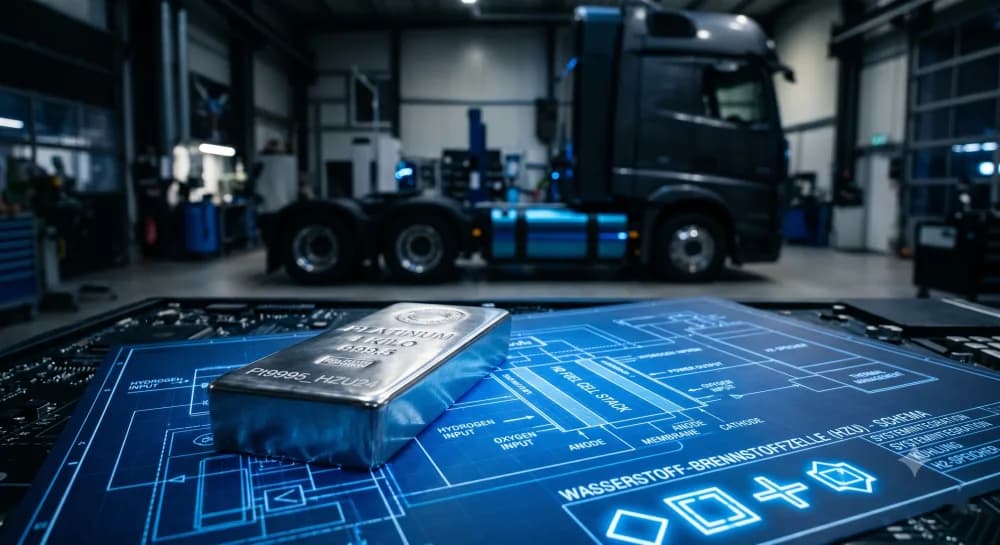
While gold and silver have dominated the headlines of the financial press in recent months, a quiet but massive structural change is taking place in another strategic precious metal. Platinum, long primarily dependent on the market for diesel catalytic converters, is facing a technological renaissance. The driver? The global hydrogen economy.
Medium to Long-Term Bullish. The physical platinum market is heading toward its fourth consecutive year of supply deficit in 2026. The World Platinum Investment Council (WPIC) expects a shortfall of around 297,000 ounces for 2026. For the period until 2030, an average annual deficit of over 330,000 ounces is expected.
Inventories are shrinking: Above-ground reserves have fallen by almost 40% since 2023 and currently only cover 3 to 4 months of demand – the lowest level since 2014. If this buffer continues to fall, the market will react extremely volatilely to the smallest disruption.
Resistance (Short-Term Bearish): The strong fundamental picture is currently being overshadowed by financial market effects (ETF outflows) and high interest rates. In addition, there is weakening jewelry demand in China. Without these factors, the physical bottleneck would have impacted the price even more significantly long ago.
Before we dive deep into fundamental demand, it is worth taking a look at the current estimates from major financial institutions. Analysts largely agree that the platinum price has upside potential in the coming years.
| Institution / Analyst | 2026 (Year-end) | 2027 | 2028 |
|---|---|---|---|
| Bank of America | ~ 2,450 USD | ~ 3,000 USD (Avg. Q4/26 - H1/27) | No data |
| Commerzbank | ~ 2,300 USD | No data | No data |
| Metals Focus | ~ 2,190 USD | No data | No data |
| LongForecast | ~ 2,320 USD | ~ 2,235 USD | ~ 2,400 USD |
| WalletInvestor | ~ 1,800 USD – 2,050 USD | ~ 1,840 USD | ~ 1,950 USD |
Platinum is primarily a critical industrial metal and less of a monetary metal like gold:
Automotive Industry (~40–45%): The absolute main driver. Platinum is used in catalytic converters (especially in diesel vehicles, but increasingly as a replacement for the more expensive palladium in gasoline engines due to cost reasons). Although electric cars (BEVs) do not require platinum, internal combustion engines and hybrids are proving much more persistent in the market than many analysts expected.
Future Technology / Hydrogen (The Growth Market): Platinum is essential for the energy transition. It is required in PEM electrolyzers (for the production of green hydrogen) and in hydrogen fuel cells (FCEVs) for heavy-duty trucks. Exponential growth in demand is expected here in the coming years.
Industry (~25%): Indispensable in glass fiber production, in the manufacture of LCD screens, in chemistry (fertilizer production, silicones), and in medical technology (pacemakers, instruments).
Jewelry & Investment (~30%): Traditionally in high demand as jewelry, especially in the Asian region (currently declining), as well as worldwide as a physical investment in the form of coins and bars.
The influence of the hydrogen economy on the platinum market is often described as the most important structural demand driver of the next decade. Currently, the share is still small, but the absolute growth potential is enormous. This increase could completely compensate for the slow phase-out of internal combustion engines (ICE) in the long term.
Based on the latest forecasts from the World Platinum Investment Council (WPIC) from 2026, the following development is evident:
Demand is primarily split between two technological pillars, both of which rely on so-called PEM technology (Proton Exchange Membrane). Platinum is by far the most efficient and corrosion-resistant catalyst material here.
To produce "green" hydrogen, electricity from renewable energies is used to split water into oxygen and hydrogen. PEM electrolyzers require platinum at the electrodes. The global capacity of these electrolyzers has almost tenfold between 2021 and today. The construction of new production plants and hydrogen hubs alone is estimated to tie up to 200,000 ounces annually by 2030.
There is, however, a technological risk: alkaline electrolysis requires almost no platinum group metals. But it is often larger and less flexible with fluctuating power supply from wind and solar. In addition, the industry is pushing "thrifting" to reduce the amount of platinum required per kilowatt of power.
While pure battery cars (BEVs) dominate in passenger cars, the future of the fuel cell lies in heavy-duty transport, i.e., in trucks, buses, trains, and ships. In a fuel cell, hydrogen reacts with oxygen back into water, generating electricity for propulsion. A fuel cell for a truck today requires many times more platinum compared to a conventional diesel catalytic converter.
Experts expect a decisive tipping point: heavy hydrogen-powered trucks (Heavy-Duty FCEVs) are expected to reach cost parity with diesel trucks in Europe and China around the year 2030. From this moment on, platinum demand from the transport sector is expected to curve steeply upward.
Platinum is currently an exciting investment for investors who believe in the success of the hydrogen transformation. However, even if technology metals offer enormous potential, they are subject to industrial business cycles and substitution risks from new processes.
Anyone wishing to place their portfolio on a truly crisis-resistant foundation should focus on monetary precious metals. Gold and silver offer the ultimate protection against inflation and currency turbulence – completely independent of industrial trends.
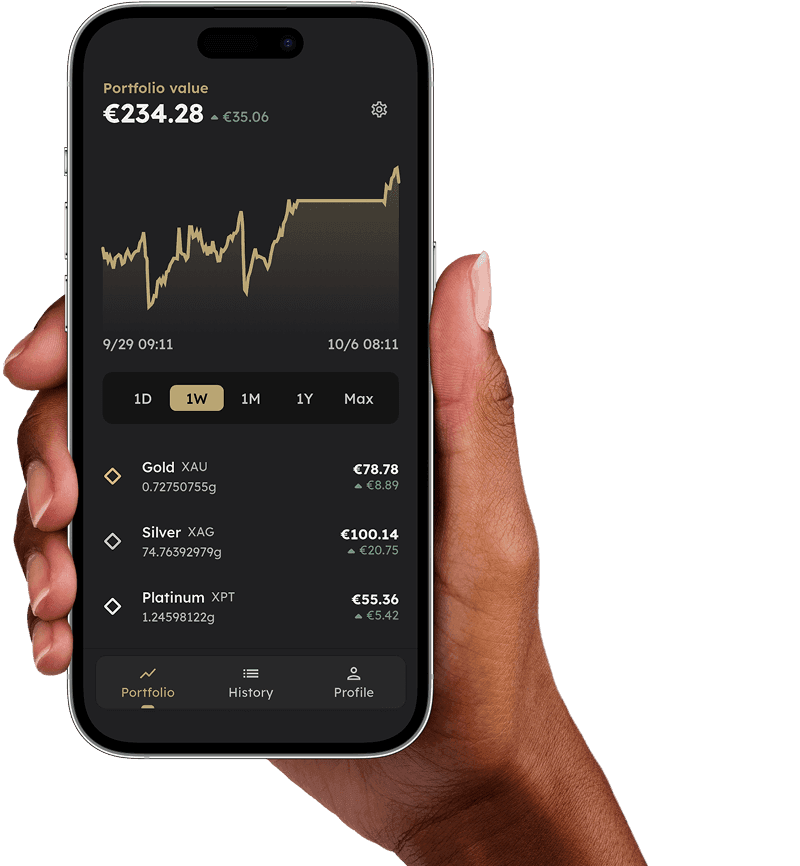
Do you want to secure your assets? The Spargold App makes purchasing physical platinum, gold, and silver easier than ever before. Buy, store, and manage real assets conveniently via your smartphone. Use the stability of classic precious metals as a solid anchor in a technologically volatile world.
Stay forward-looking
Yours, Nils Gregersen