
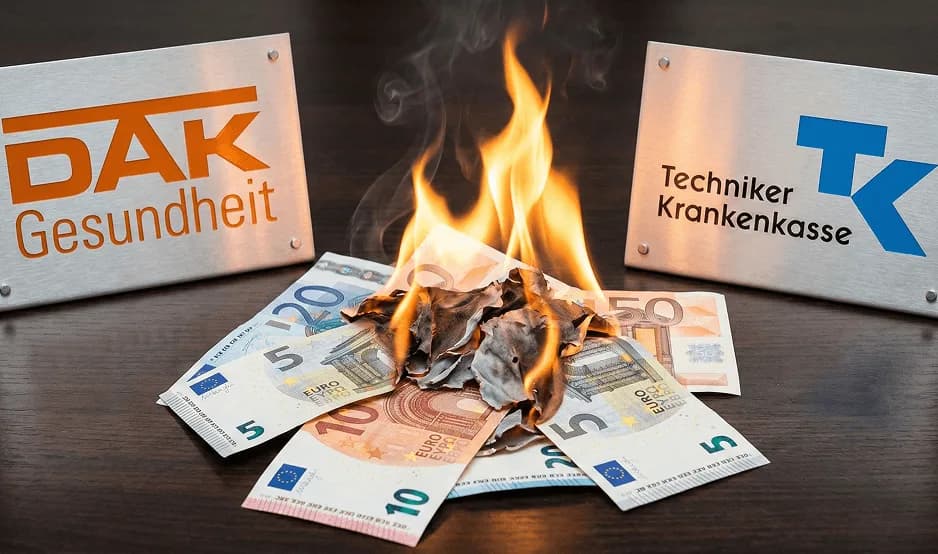
It is the news that is startling millions of people in Germany shortly before Christmas 2025: Despite hastily passed austerity packages by the federal government, major health insurance funds such as Techniker Krankenkasse (TK) and DAK are significantly increasing their additional contribution rates at the turn of the year 2026. Whether employees or retirees – for almost all statutory insured persons, this means a noticeable reduction in net income. We analyze the relentless reasons for the cost explosion and show how to protect oneself privately.
The Promise of Stability Has Been Broken
The ink on the Mediation Committee's compromise was barely dry when reality caught up with politics. Health Minister Nina Warken (CDU) had hoped to keep contributions stable through an austerity package of nearly two billion euros – including a cost brake for clinics. However, the pure mathematics of statutory health insurance (GKV) speaks a different language.
The facts are on the table: Techniker Krankenkasse is increasing its additional contribution from 2.45 to 2.69 percent. Policyholders of DAK-Gesundheit are hit even harder: here, the rate climbs from 2.8 to a hefty 3.2 percent. These are not marginal cases; it affects nearly 18 million people at these two funds alone. The average orientation value now stands at 2.9 percent – a historically high level.
The True Reasons: Why the System is Collapsing
While politicians often speak of "rising expenditures" in general, an unvarnished, financial-journalistic look at the structural causes of this price spiral is worthwhile. It is a toxic mix of demographics and system strain that is pushing the principle of solidarity to its limits.
1. The Demographic Meltdown
The pay-as-you-go system is bleeding out. The baby boomer generation is increasingly entering retirement. This means: fewer active employees must support more and more benefit recipients. Statistically, older people require significantly more expensive medical care. Since birth rates have been too low for decades, the ratio of contributors to benefit recipients is tipping inexorably.
2. Migration into Social Systems
One factor that is politically unpopular to address but economically relevant is migration. In recent years, millions of people have been admitted to the German GKV system who have never paid in before and whose contributions – often covered by social welfare providers (Bürgergeld) – do not cover costs. If per capita expenditure is higher than per capita income, a deficit arises that the working middle class and retirees must offset through higher contributions.
3. Medical Inflation and Mismanagement
In addition to structural problems, costs for treatments and medications are exploding. Expenditures are expected to rise to 370 billion euros in 2026. At the same time, clinics are suffering from an investment backlog, which in turn must be financed through emergency aid. The government's current austerity package plugs holes but does not repair the foundation.
Less Net for Everyone: Employees and Retirees as Losers
For policyholders, this development is particularly bitter. Employees see on their pay slips how the social security contribution burden continues to rise and eats up wage increases. Retirees are often hit even harder: since pension increases are rigidly tied to formulas, a rising additional contribution directly reduces the pension paid out.
It is a "reach into the pockets" of citizens against which they can hardly defend themselves, as switching health insurance funds often brings only marginal savings and all funds are equally under cost pressure. Purchasing power is dwindling while the tax and contribution burden increases.
The Way Out: Asset Protection Outside the System
Developments in the healthcare sector show one thing clearly: state systems and the purchasing power of the Euro can no longer be relied upon in the long term. Those who rely solely on the statutory system are being gradually expropriated by rising levies (such as the GKV additional contribution) and inflation.
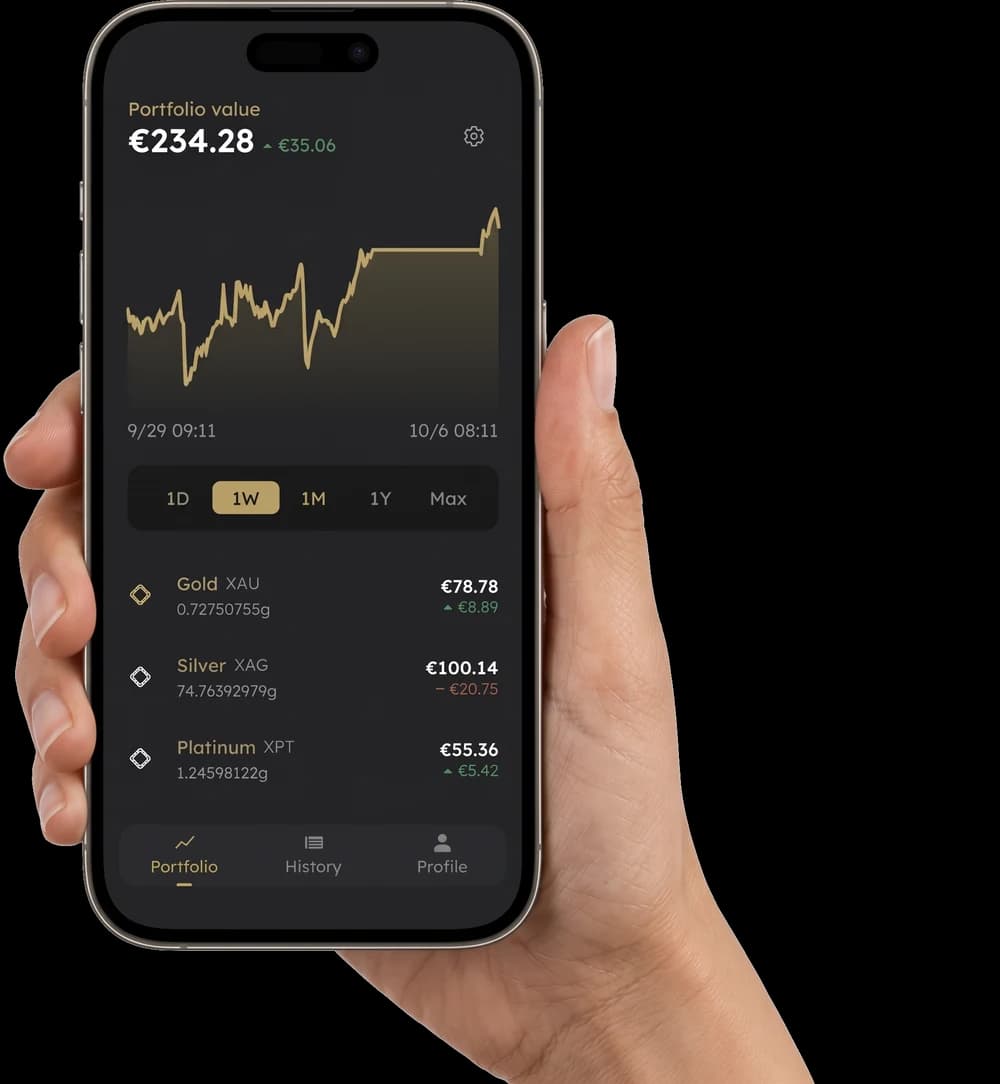
In this uncertain environment, precious metals are once again becoming the focus of savvy investors. Gold and silver are not dependent on political austerity packages or demographic shifts. They are:
- Inflation-resistant: While the Euro loses purchasing power and levies rise, gold retains its real value.
- Anonymous and liquid: Precious metals belong to you physically, without any authority or insurance company having access to them.
- A real supplementary pension: One gram of gold can be exchanged for liquid funds anywhere in the world at any time to close any financial gaps when net income shrinks due to state levies.
It is time to take financial health into your own hands. When the state increases contributions, owning physical gold and silver is the best insurance against the loss of your money's purchasing power.