Gold in April 2026: When Inflation and Interest Rates Pressure Simultaneously – and Gold Remains High

April 20, 2026
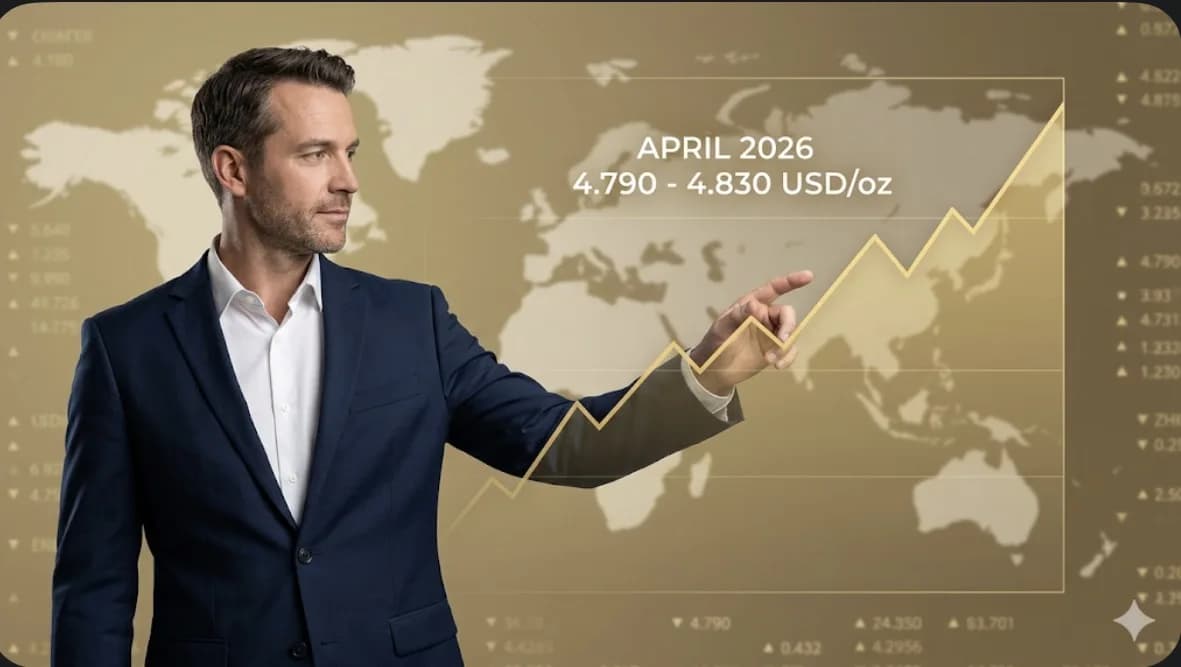
In April 2026, gold is moving within a price range that would have seemed like science fiction just a few years ago. Spot prices recently fluctuated roughly between 4,790 and 4,830 US dollars per troy ounce. At the same time, the price reaction shows something unusual: gold is retreating on individual days, even though the news cycle suggests a “safe haven” environment.
The central driver is a well-known tension: inflation versus interest rate levels. In the US, the Consumer Price Index rose by +0.9% in March compared to the previous month; on an annual basis, inflation stands at +3.3%. Particularly striking: energy provided a strong push, intensifying the inflationary impulse in the short term. It is precisely this combination – inflation concerns plus rising yields – that can weigh on gold at times, as holding non-interest-bearing assets becomes mathematically “more expensive.”
The current interest rate backdrop fits this picture: the upper limit of the US Fed Funds range was recently at 3.75%. This is important because gold does not trade against “inflation” alone, but against the mix of real interest rates, dollar strength, and risk appetite. Reuters recently described exactly this effect: a firmer dollar and rising yields put gold under short-term pressure – even amid escalating geopolitical tensions.
What does this mean for a sober assessment? A look at the long-term data from the Monthly Gold Compass shows how strongly gold has already performed in recent years. For 2025, an annual performance of +64.4% is reported for gold in USD; for 2026 YTD (as of March 31, 2026), gold stands at +8.2%. This magnitude helps to contextualize current fluctuations: after very strong previous years, even minor changes in interest rates or the dollar are enough to trigger noticeable daily movements.
The psychological situation is also intriguing: record prices are dampening jewelry demand in some markets, while investment and hedging demand tends to flow through instruments and bars/coins. Reuters, for example, reported subdued festival demand in India due to high prices. This shows: “high price” does not automatically equate to “high demand in every category.” Markets are segmenting.
Ultimately, a pragmatic takeaway remains: in the short term, gold often reacts to the dollar and yields – but in the medium to long term, it reacts to confidence in purchasing power. That is precisely why it is worth keeping an eye not only on the gold price but also on inflation data and key interest rates.
Table: Gold – Contextualizing Recent Performance
|
Key Metric |
Value |
Period/Status |
|
Gold Performance in USD |
+64.4% |
Year 2025 |
|
Gold Performance in USD |
+8.2% |
2026 YTD (as of March 31, 2026) |
|
Gold Performance in USD (total) |
+1,524.2% |
2000 to 2026 YTD |
Stay farsighted
Yours, Helge Peter Ippensen