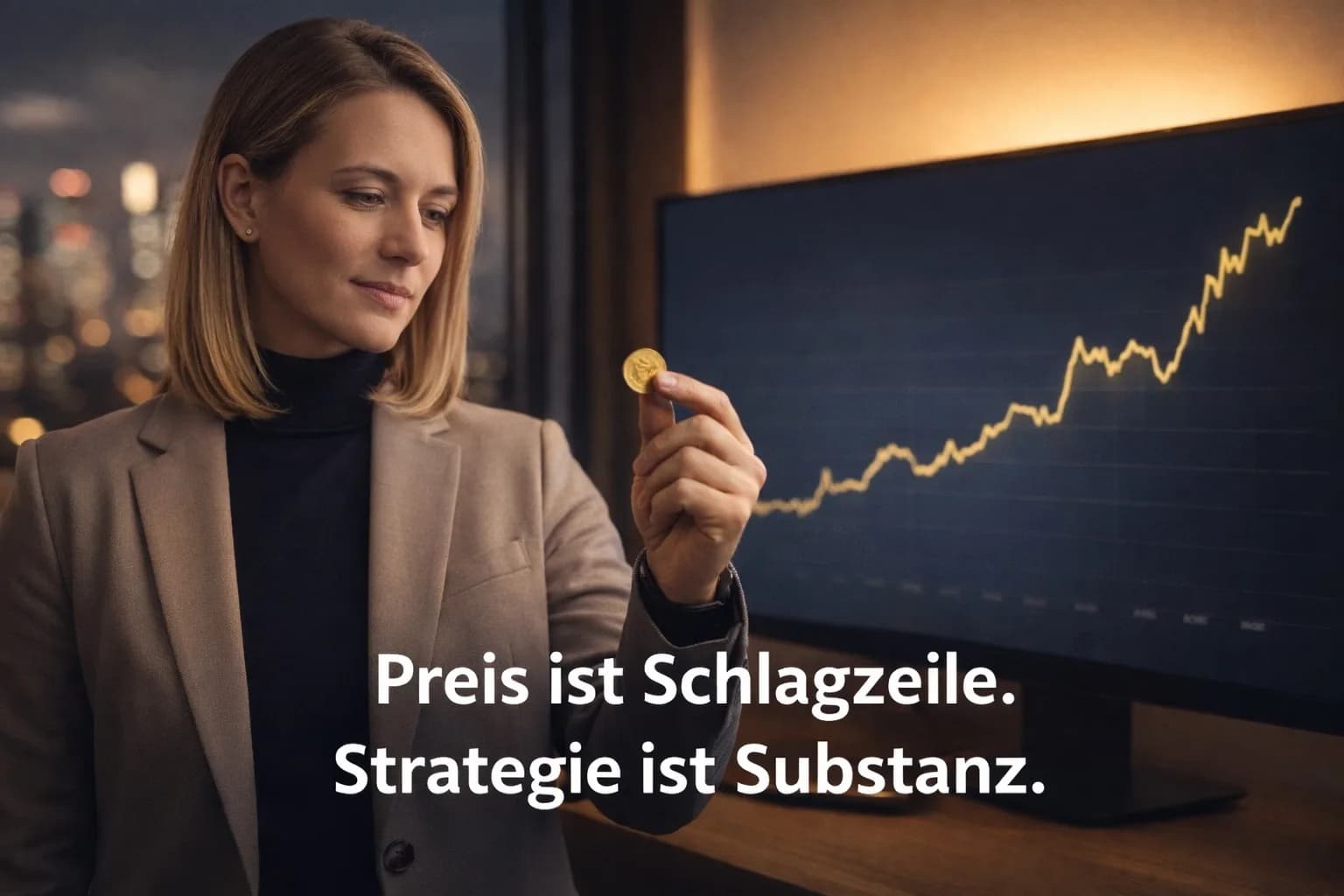
Gold was quoted today at around 5,227 US dollars per troy ounce and is heading for its seventh consecutive monthly gain. In such phases, not only the price rises, but also the need for information: many investors wonder if they are „too late,“ if paper assets are still sufficient, and if precious metals are becoming more important again as a tangible asset component.
The obvious reaction is often: „Then I'll buy gold now.“ However, the more sensible question is: „Which precious metal strategy fits my goal, my liquidity, and my sense of risk – and how do I implement it properly?“ Because a high price is only a signal. A robust strategy is the structure behind it.
Precious metals are often viewed as a pure crisis instrument. In practice, however, they fulfill various functions in the asset mix: store of value, diversification, psychological anchor in volatile market phases, and in some constellations, a hedge against trust crises in the financial system. The fact that gold is once again so strongly in focus also has to do with the overall picture: geopolitical tensions, fluctuating real interest rates, and an environment in which major players visibly prioritize diversification.
A sober look at demand helps to put this into perspective. The World Gold Council reports central bank purchases of 863 tons for 2025, which remains historically elevated. This is not a short-term trend, but a structural signal: many institutions are thinking in terms of resilience.
Precious metals do not yield ongoing interest. Nevertheless, they do not only rise when interest rates fall. What is often decisive is how markets price in the next steps. In the Eurozone, the ECB left key interest rates unchanged at the beginning of February 2026; the deposit rate is 2.00%, and the main refinancing rate is 2.15%. For investors, this means: precious metals continue to compete with interest-bearing alternatives, but attractiveness depends heavily on inflation expectations, risk aversion, and questions of currency and trust.
Many discussions revolve around „gold yes or no.“ In practice, however, the „how“ is what matters: physical at home, in professional custody, in a bonded warehouse, or via exchange-traded products. Each variant has its own costs, liquidity characteristics, tax, and operational specifics. Indirect costs are particularly often underestimated: spreads, premiums, storage and insurance fees, but also the question of how quickly a holding is actually available or sellable in an emergency.
The following overview categorizes the options strategically. It does not replace an individual assessment but makes typical trade-offs visible.
| Implementation | What it is suitable for | Typical trade-offs | What investors often notice too late |
|---|---|---|---|
| Physical at home (coins/bars) | Immediate sense of ownership, simple logic, no third party in everyday life | Security and insurance issues, storage, limited anonymity when selling depending on the method | Documentation, resaleability, denomination, and liquidity in stress phases |
| Professional custody (e.g., high-security vault) | Long-term asset structure, larger amounts, clear processes | Ongoing fees, trust in service providers, access/logistics | Contract details, proof of ownership (Allocated), cost model over time |
| Bonded warehouse (depending on country/model) | International diversification, sometimes attractive framework conditions | More complex structure, logistics, and legal framework | Transparency of storage lists, audit quality, exit process |
| Exchange-traded products (ETC/ETF depending on design) | High liquidity, easy tradability, rapid adjustment of the allocation | Product and issuer/structural risks, not „in hand“ | Difference between „physically backed“ vs. structural details, expense ratio, trading in stress phases |
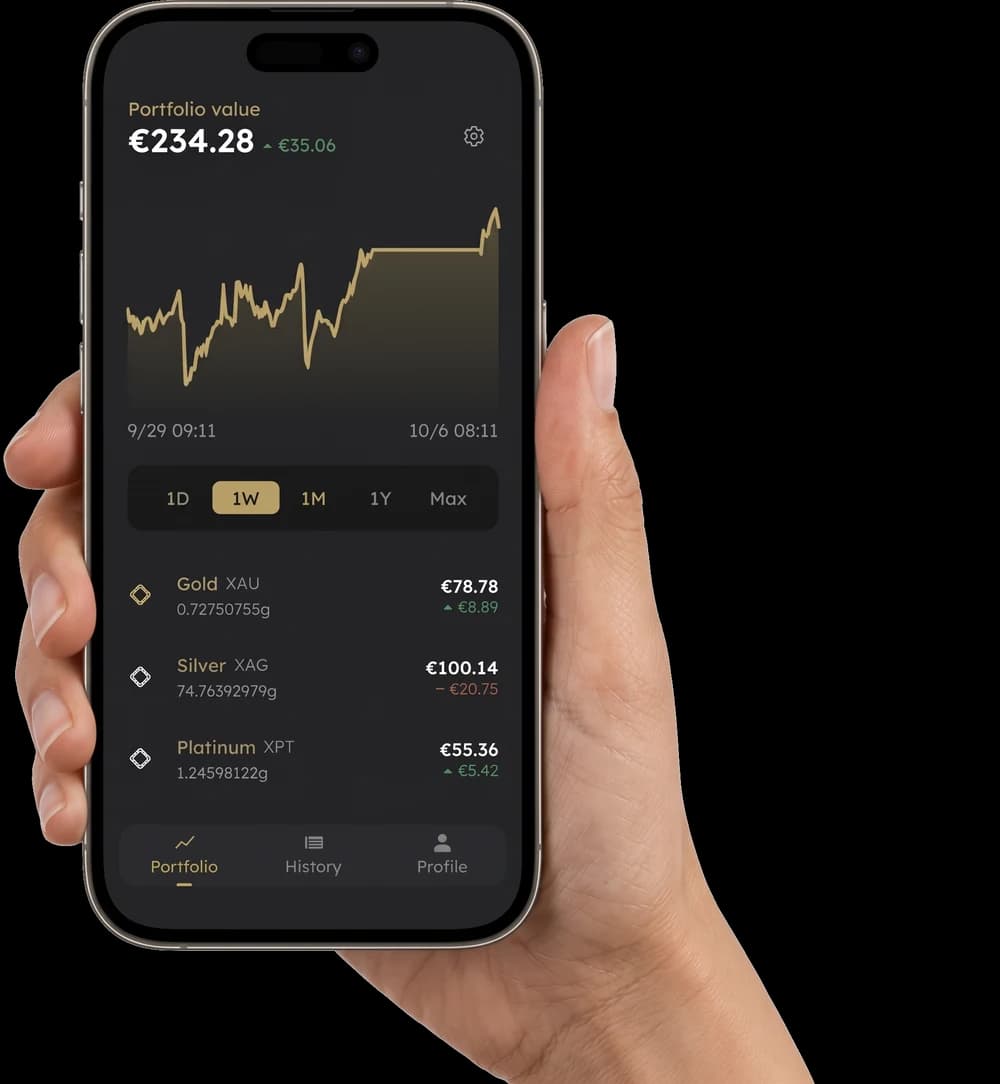
Savings plans have a calming effect because they create routine. But routine is only helpful if it contributes to the goal. Those who need to build up liquidity reserves should not force rigid metal purchases in parallel. Those who diversify for the long term, on the other hand, can smooth out fluctuations with a rule-based build-up. The set of rules is crucial: What is the target allocation? At what deviation is an adjustment made? What happens when gold rises sharply, as it is doing now? Especially in an environment where gold reaches new milestones within a short time, a mechanism can be useful that does not buy based on „feeling,“ but on structure.
At spar.gold, the goal is not to „sugarcoat“ precious metals, but to categorize them cleanly as a component: transparent, comprehensible, and in a form that fits the reality of life. Anyone using precious metals should answer three things clearly: First, what function they have in the overall assets. Second, which form of implementation fits their own security and liquidity profile. Third, how the costs work over years, not just at the moment of purchase.
In phases with headline prices like today, the biggest mistake is not being „too late.“ The biggest mistake is acting without a plan. Price movements come and go. A strategy remains.
Stay farsighted, Yours Helge Peter Ippensen