Business Families in Crisis Mode: Why Gold, Taxes, and Geopolitics Shape Wealth Strategy 2026

April 5, 2026

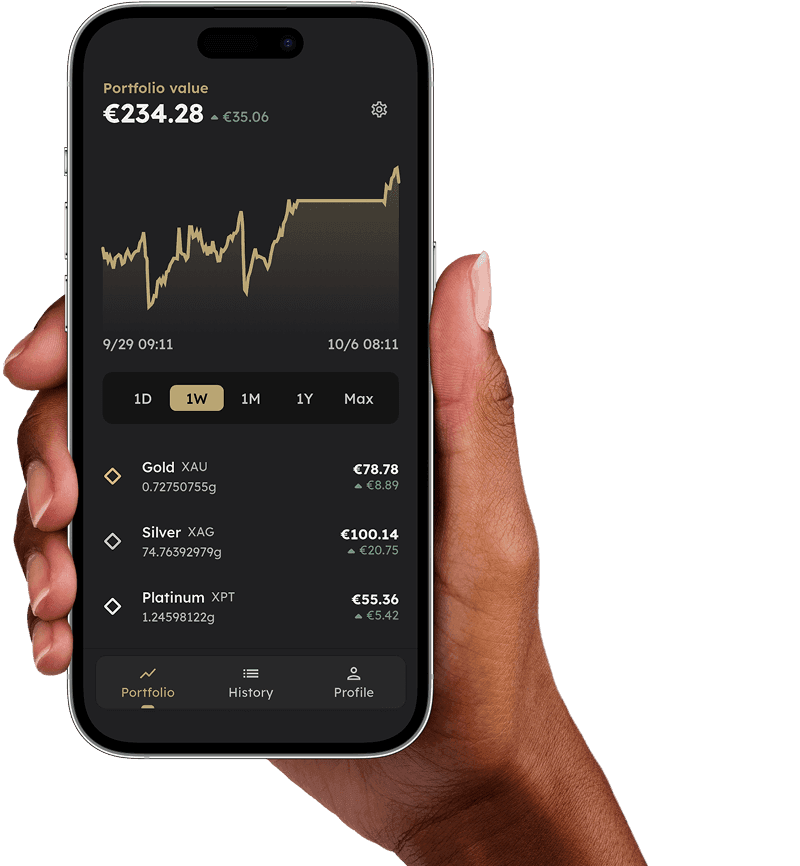
On 04.04.2026, the gold price stands at approximately 4,059 euros per troy ounce. This is not just a number for traders, but a signal of a larger pattern: when uncertainty rises, investment decisions become more sober, broader – and often more defensive.
This is exactly what the 6th "wir" Barometer (March 2026) shows, a survey of 140 individuals from the environment of German business families (predominantly shareholders, often in operational or committee roles). The results are also exciting because the survey took place in January/February 2026 – even before new geopolitical escalations dominated the headlines.
At its core, the study tells a story that many private investors underestimate: business families do not think in "portfolio fashions," but in robustness. They invest in such a way that wealth functions even when politics, interest rates, trade, or energy prices simultaneously send opposing impulses.
What threatens the preservation of family wealth the most? The ranking is clear – and political.
In the Barometer, 71% of respondents cite the increase in taxes and levies in Germany as the greatest danger. The trend is interesting: compared to 2025, this is a jump of 9 percentage points to a new record high within the Barometer series.
Immediately following are risks directly related to competitiveness and social stability: 45% are concerned about Europe's slow pace in technical developments compared to the USA and China, and another 45% about populism and social division. Trade wars and market isolation remain relevant at 40% – but are no longer the dominant driver as in phases of acute escalation.
These priorities fit into an environment where inflation is becoming more visible again: for Germany, Destatis reported a preliminary +2.7% for March 2026 compared to the previous year. Taxes, energy, and price shocks have a double effect on business families: operationally in the company and strategically in the wealth.
| Threat (Multiple answers possible) | Share 2026 | Share 2025 |
|---|---|---|
| Increase in taxes and levies in Germany | 71 % | 62 % |
| Europe's slow pace in technical developments (vs. USA/China) | 45 % | 46 % |
| Populism and division of society in industrialized countries | 45 % | 40 % |
| (Trade) wars and isolation of markets | 40 % | 44 % |
| Inflation | 10 % | 15 % |
Source: 6th "wir" Barometer (March 2026).
Despite all uncertainty, value preservation remains important – but the weighting is changing. 44% cite real value preservation as a long-term investment goal, while 22% prioritize a relative return compared to a benchmark. Compared to the previous year, the focus on real value preservation has dropped significantly (from 52% to 44%).
This is a subtle but crucial difference: business families do not seem to be becoming more "risk-tolerant" – they are becoming more precise. When benchmarks become more important, expectations and measurability increase. One does not just want to "get through," but to be demonstrably better than a reference framework.
Perhaps the clearest finding for precious metal investors is the performance block. Looking back at 2025, 40% of respondents state that gold exceeded target figures – more frequently than any other asset class. For equities, 32% report this, and for commodities/infrastructure, 17%.
At the same time, the detailed table shows: Gold is not necessarily "huge" in these portfolios, but it is effective there – as a component that exceeds expectations in stress phases. And that is exactly the logic of many business families: a portfolio must not only deliver returns but also remain stable during the wrong weeks of the year.
The fact that gold is currently trading at approximately 4,059 euros per ounce (as of 04.04.2026) is therefore less an occasion for speculation than an occasion for classification: precious metals are not a fashionable addition in these wealth strategies, but a recurring anchor of stability.
Another signal from the Barometer: 57% see noticeable effects of geopolitical changes and trade policies on the internationalization strategy of their family business.
Among those who feel changes, the focus is shifting measurably: 45% plan to expand activities in Europe, while the USA and China are evaluated more heterogeneously. This is remarkable because it does not sound like "decoupling," but like risk management: proximity, legal certainty, supply chains, currency, and sanction risks are being newly priced into the strategy.
This is also part of the reality: 44% do not consider sustainability aspects in their investments (up 4 points from the previous year). And even among families that do consider sustainability, the willingness to sacrifice returns is falling: 44% would be willing to give up returns for it – in the previous year, it was 53%.
This initially seems like a step backward, but it is also an expression of an environment with higher cost pressure and political uncertainty: when taxes, energy, and regulation increase as sources of risk, every "additional condition" in the portfolio is scrutinized more strictly.
The most important insight is not that one should copy these portfolios. The most important insight is the mindset behind them: business families treat wealth investment as a system, not as a collection of individual ideas. They simultaneously pay attention to political framework conditions, real purchasing power, currency and location issues, as well as the role of stabilizing components like gold.
Anyone wanting to align their wealth today can take guidance from understanding their own strategy less as a "yearly bet" – and more as a structure that can withstand multiple future scenarios. In a time when inflation in Germany recently reached 2.7% again (preliminary, March 2026), this robustness logic is more than an academic concept.
Stay farsighted
Yours, Helge Peter Ippensen