Anyone looking at precious metal charts these days might think: relaxation. After the extreme volatility of recent weeks, gold and silver have recovered somewhat in the meantime. However, in physical trading, many signals point in a different direction: the problem is not the price, but the availability of the goods.
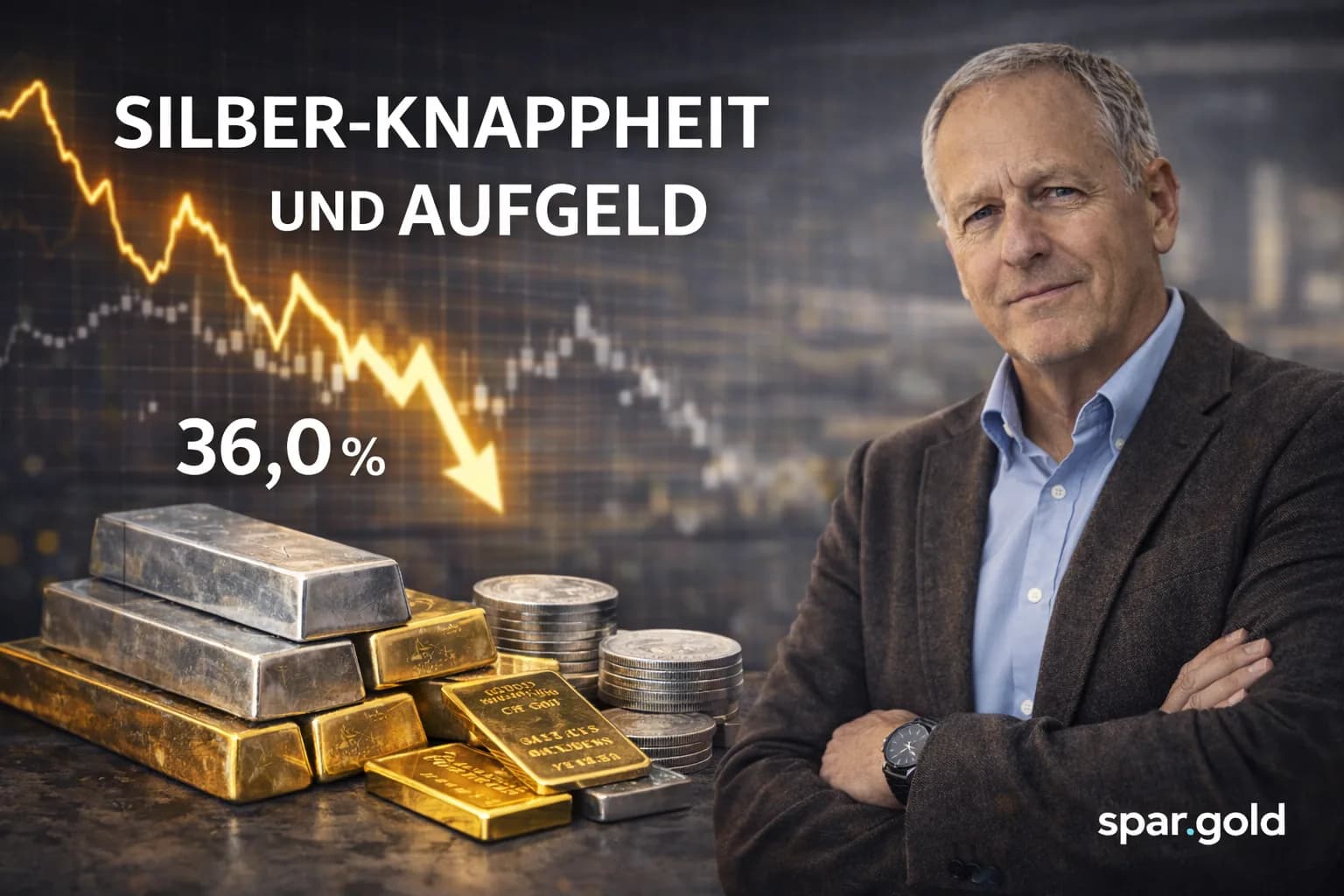
A particularly tangible indicator is the premiums. For silver products, surcharges in the range of around 30% were recently reported; in one analysis, the premium in early February was even 36.0%. This makes visible what many buyers experience in shops as "not immediately available," "pre-order," or "delivery date pending": a gap is emerging between the exchange price and actual availability.
Silver has a dual role. It is both a monetary metal and an industrial metal. It is precisely this mixture that makes the situation vulnerable: when investors buy during periods of stress and industrial demand remains stable at the same time, the market quickly becomes "tight."
In addition, there is the processing chain: raw silver does not automatically become investment silver. Refineries, mints, logistics, and quality requirements are bottlenecks that cannot be ramped up at will. A recent report describes that individual players first have to work through their backlogs – the Australian Perth Mint is reportedly not accepting any new orders until February 23.
Another driver of the discrepancy lies in the futures market. This is where risks are managed, positions are hedged, and speculation occurs – with volumes that bear no relation to the physical circulating supply.
The contract logic for silver is well known: a standard contract on the COMEX corresponds to 5,000 ounces. Market data in early February showed an open interest of around 143,180 contracts. If you convert this mechanically, this outstanding contract volume alone corresponds to a quantity of silver in the range of hundreds of millions of ounces. This does not explain "scarcity" in the warehouse per se, but it explains why price movements in the paper market can become very large very quickly – without physical goods immediately changing hands proportionally.
And the reverse is also true: if physical demand suddenly picks up, it can lead to delivery backlogs for certain product groups faster than a pure spot chart would suggest.
Gold often appears "orderly" in such phases compared to silver, but the market psychology is clear here too: when uncertainty rises, the search for stable reserves increases.
A fresh, reliable data point comes from China: The People’s Bank of China increased its gold holdings in January to 74.19 million troy ounces (previously 74.15 million). Such figures are not a short-term trading impulse, but they show the framework: major players remain committed to the asset.
Regarding the price level, the range is currently high, but for orientation: spot quotes of around 4,980.40 US dollars per troy ounce of gold were reported for February 7, 2026. At the same time, market media report strong fluctuations over the past few days, in which gold and silver moved massively within short periods.
A common misconception is: "If the spot price falls, it must automatically become cheaper in retail." In practice, it is more nuanced. The spot price is a reference price for standardized trading venues. A physical investment product also has costs and bottlenecks: minting, procurement, financing, insurance, transport, storage, and simply the question of whether the item is available immediately at all.
When premiums rise, it doesn't necessarily mean that "everything is sold out." It primarily means: the goods that can actually be delivered now become relatively more expensive compared to the paper price. This is exactly why premiums are an early warning signal – not only for scarcity but also for stress in the entire precious metal ecosystem.
| Signal | Current Value/Observation | Classification |
|---|---|---|
| Premium on silver products | up to 36.0% (early Feb.) | Indication of bottlenecks/high immediate demand in the physical market |
| Perth Mint order stop | no new orders until Feb. 23 | Capacity limit in the product chain (backlogs) |
| COMEX Silver Open Interest | approx. 143,180 contracts | Paper market volume remains high and can amplify price fluctuations |
| Gold Spot (Reference) | approx. 4,980.40 USD/oz (Feb. 7) | Price level high, but not solely indicative of the physical situation |
| China's gold reserves | 74.19 million oz (Jan.) | Strategic demand foundation, independent of daily volatility |
In such market phases, a clear separation helps:
The exchange price answers the question of how the market is currently valuing risk. Physical trading answers the question of what is actually available today in what quantity. When the two diverge, premiums and delivery times arise – and both can last longer than a chart suggests.
For classification, the impulse of "rising or falling" counts less than the combination of price, liquidity, deliverability, and market structure. Silver in particular regularly shows: the metal reacts faster, more violently, and more contradictorily than gold – and that is precisely where its specific risk profile lies.
Maintain your long-term perspective
Yours, Helge Peter Ippensen