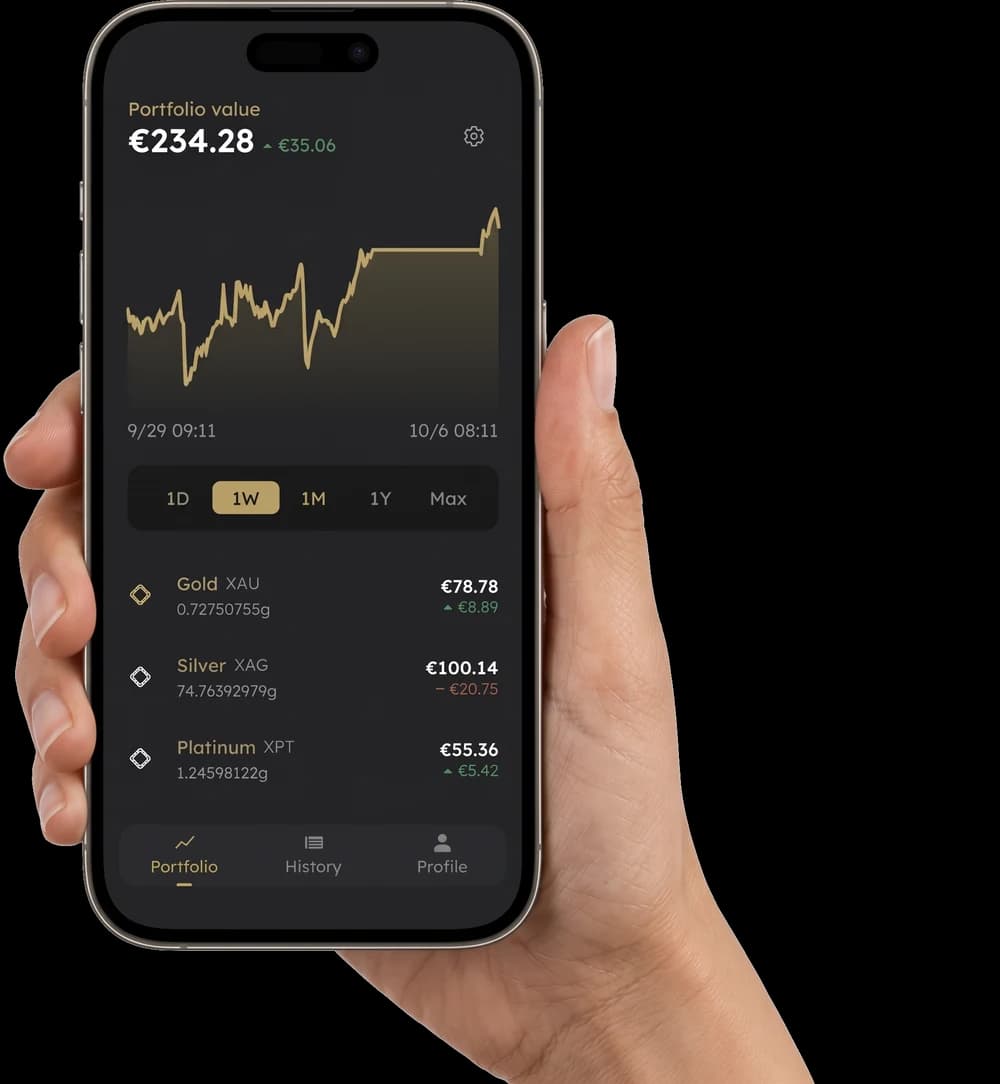
Anyone dealing with investments frequently encounters the term trading. This refers to the active trading of financial instruments such as stocks, CFDs, currencies, or cryptocurrencies via online platforms. In contrast, there is a tangible asset-oriented approach such as Spargold, where physical gold is regularly acquired and held as property.
Both models pursue different objectives, function according to completely different mechanisms, and appeal to different types of investors.
Trading involves attempting to generate profits from short-term or medium-term price movements. The focus is not on owning a real asset, but on price changes. Leveraged products are often used, which can multiply profits but also losses. Success depends heavily on market knowledge, discipline, time commitment, and psychological resilience.
Trading is therefore not classic saving, but a form of active speculation on financial markets.
Spargold is based on the regular purchase of physical gold. The gold is actually acquired, stored, and allocated to the customer. The goal is not short-term profit through price fluctuations, but long-term value preservation and asset protection. Gold serves as a tangible asset that exists independently of monetary systems, interest rates, or stock market hours.
This approach requires no daily market monitoring and is designed for continuity and stability.
| Comparison Criterion | Trading | Spargold |
|---|---|---|
| Basic Idea | Exploiting price movements | Building physical tangible assets |
| Investment Object | Financial instruments, derivatives | Physical gold |
| Ownership | Usually no direct possession | Full ownership of the gold |
| Risk | High, partly risk of total loss | Comparatively low |
| Time Horizon | Short to medium term | Long term |
| Effort | High, active market monitoring | Low, automated saving |
| Objective | Returns through speculation | Value preservation and hedging |
Trading is primarily aimed at people who deal intensively with financial markets, consciously take risks, and want to trade actively. Spargold, on the other hand, appeals to investors who value stability, transparency, and real assets and want to secure wealth step by step.
In practice, both approaches are not necessarily mutually exclusive, but they fulfill different functions. While trading focuses on short-term opportunities, Spargold is geared towards long-term security.
Trading and Spargold represent two different mindsets in investment. One is speculative, time-consuming, and risky, while the other is tangible asset-oriented, long-term, and focused on value preservation. Those seeking a steady, substance-based strategy will find physical gold savings to be an alternative to classic trading models.