Silver Price Update: Between Fed Relief and Trump Shock – Is the $100 Mark Imminent?

May 3, 2026
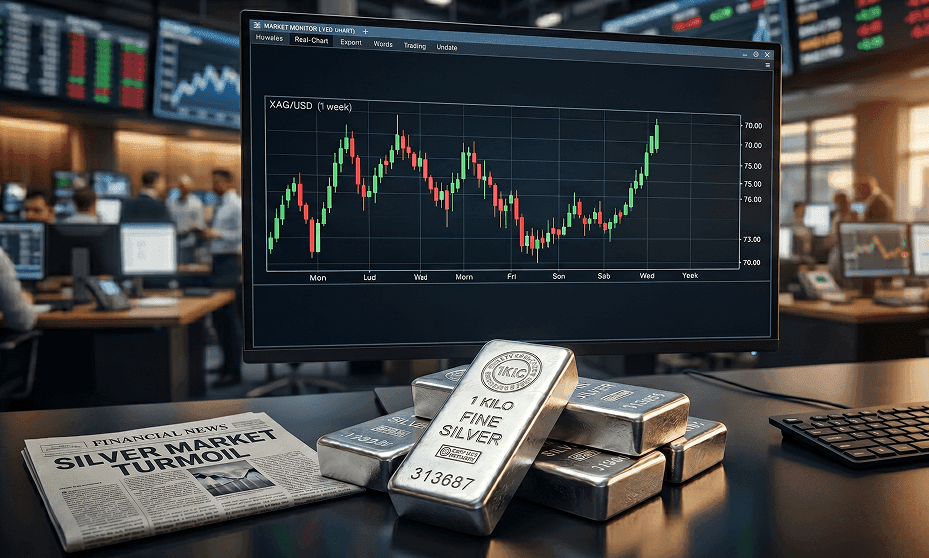
The silver market looks back on a turbulent trading week in which relief over the recent Fed decision stabilized the price and lifted it above the important $75 mark. While new tariff threats from the US and a persistent structural supply deficit create highly explosive upward potential, analysts simultaneously warn of a volatile sideways phase. Find out in this analysis whether the current mix of geopolitics and investment boom is sufficient to sustainably drive silver towards the $100 mark.
Investors looked to the US Federal Reserve with great anticipation this week. There was significant concern that unexpectedly hawkishly formulated communiqués could shake the markets. However, the relief was palpable when it became clear: there were no nasty surprises. The Dax, the Dow Jones, and the Nasdaq reacted positively, and precious metals also breathed a sigh of relief.
Price development illustrates the tension: shortly before the announcement, the silver price threatened to slip below the $70 mark. The turnaround followed in the second half of the week. With a weekly close above $75, silver has established an excellent starting position for the coming trading days.
Two factors gave silver the necessary breathing room at the end of the week:
But the actual explosive force lies in geopolitics. Donald Trump unexpectedly threatened tariffs of 25% on EU auto imports. Should this tariff conflict escalate, countermeasures by the EU are certain. Such a scenario brings back memories of the violent market reactions in January 2026 – back then, silver was one of the biggest beneficiaries of the uncertainty.
Despite the current strength, some experts urge caution. Mike McGlone, Senior Market Strategist at Bloomberg Intelligence, sees silver in a possible long-term sideways movement. According to his assessment, the price could remain in a range between $50 and $100 for years.
McGlone draws parallels to 2011 and warns of the extremely high volatility, which is currently five times higher than that of the S&P 500. Nevertheless, he also considers a renewed rise towards the January highs (approx. $116) possible, provided the momentum continues.
The current annual study by the Silver Institute continues to provide fuel for the bulls. A supply deficit of 46.3 million ounces is projected for the current year. Although a decline in industrial demand is expected (particularly in the photovoltaic sector by approx. 19%), investment demand more than compensates for this:
According to Metals Focus, investment demand is expected to increase by 18%. Physically backed silver ETFs, in particular, are proving to be significant price drivers, similar to the dramatic January of this year.
Silver (XAG/USD) is currently trading at around $76.00. The precious metal is moving in a field of tension: on the one hand, the Fed's monetary policy remains restrictive with an interest rate range of 3.5% to 3.75% ("Higher for longer"), which increases the opportunity costs for silver. On the other hand, rising energy prices and geopolitical tensions in the Middle East are driving inflation concerns.
In this environment, silver is increasingly sought after as a "Safe Haven" and inflation hedge. Fed experts, such as Lorie Logan and Neel Kashkari, are leaving the door open for further tightening, but it is precisely this uncertainty that often drives investors into the arms of tangible assets.
After the multi-week correction, the signs point to recovery. For the path towards $100 to become clear, silver must now sustainably overcome the technical chart hurdle of $80. On the downside, $70 provides protection; only a fall below $60 would nullify the bullish scenario.
Investors should also keep an eye on silver producers. Stocks such as Fresnillo, Pan American Silver, Hecla Mining, or Coeur Mining were hit hard in some cases during the correction and now offer disproportionate recovery potential as the silver price picks up.
Stay forward-looking
Yours, Nils Gregersen