Silver Price Development 2018 to 2026: The Charge Towards the $100 Mark

January 16, 2026
After a historically explosive start to the new year, financial markets are taking a brief breather. The silver price is currently trading at $90.89 (approx. €78.28). This represents a slight consolidation of about 1.5% compared to the previous day.
Many investors are now asking: Is the rally over? The answer from the fundamental data is a clear "No." What we are seeing is classic profit-taking after a parabolic rise. The structural problems that drove the price—specifically the export ban from China effective since January 1st—have not been solved. On the contrary: They are just beginning to physically hit supply chains.
The fact that silver is trading above $90 at all would have been dismissed as fantasy just two years ago. But reality has caught up with the skeptics. The market is in a state that the renowned Silver Institute described as a "structural deficit" in the middle of the decade. What were statistical warnings back then are now industrial reality: There is simply too little metal available.
To understand why a price of $90 is not "expensive" but rather the new normal, it is worth looking at the price development and the respective drivers of the last few years. The table shows how silver has transformed from a plaything of speculators into an indispensable industrial metal:
| Year | Ø Price (USD) | Market Phase & Drivers |
|---|---|---|
| 2018 | $15.71 | Bottom Formation: Strong US dollar and investor disinterest keep prices low. |
| 2019 | $16.21 | Fed Pivot: The US Federal Reserve ends interest rate hikes; initial recovery. |
| 2020 | $20.55 | Corona & Liquidity Flood: After the March crash, stimulus packages drive the price. |
| 2021 | $25.14 | Green Deal: Photovoltaic demand rises massively; first deficit emerges. |
| 2022 | $21.73 | Rate Shock: Aggressive rate hikes by the Fed briefly depress precious metals. |
| 2023 | $23.35 | Banking Crisis: Uncertainty (e.g., SVB collapse) brings volatility back. |
| 2024 | $28.50 | Breakout: Silver breaks through key resistance levels, driven by AI hardware demand. |
| 2025 | $55.00 | The Turning Point: Silver overtakes Apple in market cap; massive industrial purchases. |
| Jan. 2026 | $90.89 | China Shock: Export ban dries up Western inventories. |
The decisive factor in January 2026 is Beijing's new trade policy. China is not only a large producer but, until recently, controlled a significant portion of global refining capacities for high-purity industrial silver.
Michael DiRienzo of the Silver Institute warned in the past that mine production is stagnating. Now, this stagnation is meeting an artificial shortage. According to market reports, tech giants like Tesla and Samsung are currently trying to secure their stocks directly via the Shanghai Gold Exchange (SGE)—at prices far above the Western spot market.
"We are not seeing a bubble here. We are seeing a price adjustment to physical reality. If China turns off the tap, the price must rise to mobilize new supply from recycling."
Technical analysts see an extremely strong support zone in the $88 to $90 range. If this level holds, the path to the psychologically important 100 US Dollar mark is considered paved. Banks like Goldman Sachs have already upwardly revised their forecasts for Q2 2026 due to the geopolitical situation.
For strategic investors, today's consolidation is an opportunity rather than a warning signal. While the paper market (futures, derivatives) reacts nervously to every piece of news, the physical scarcity remains.
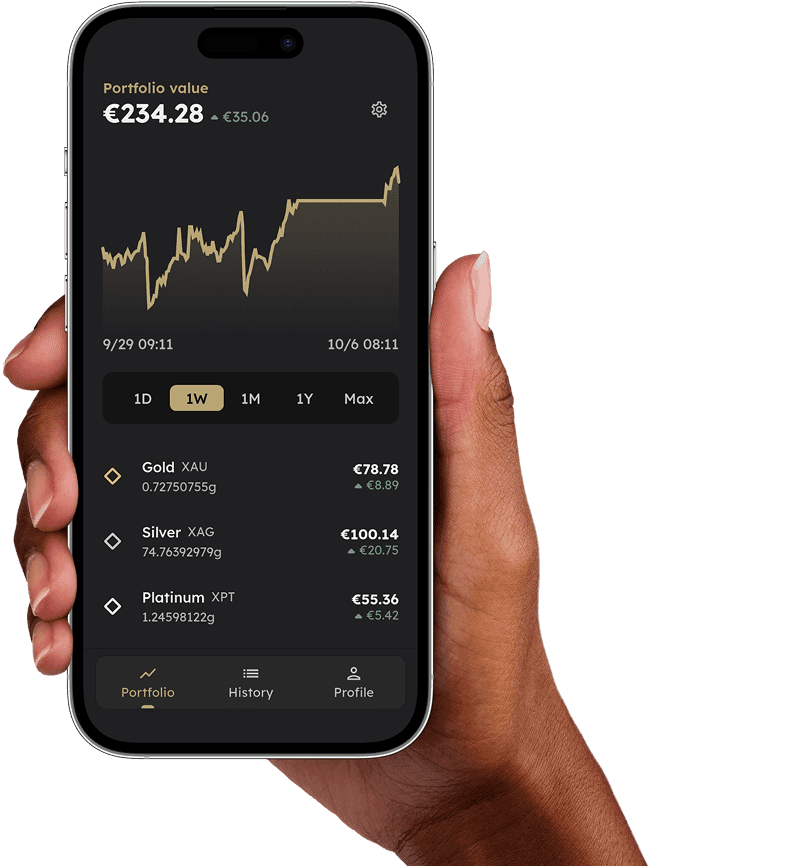
In times when supply chains are politically instrumentalized, owning physical property is the safest haven. With the Spargold App, you can react directly to these macroeconomic changes. Buy real, physical silver and gold—securely stored and independent of the turbulence in the paper markets.
Stay farsighted
Yours, Nils Gregersen