Safe Deposit Box Insurance: Reassuring on Paper – Expensive in Practice?

March 12, 2026

Anyone thinking about security today quickly ends up at the safe deposit box. Metal door, key, vault. At the same time, the environment is as "financial" as it has rarely been: The gold price on 12.03.2026 is around 4,469.65 euros per troy ounce. In such phases, many people deal more intensively with the protection of their assets – not only with storage, but above all with the question of what is really covered in the event of a claim.
In parallel, inflation has recently weakened slightly. The Federal Statistical Office reports an inflation rate of +1.9% for February 2026 (compared to +2.1% in January 2026). This takes the pressure off everyday life but does not solve the core conflict: assets should be reliably protected without security becoming a secondary task.
Interest rates also continue to be an important point of orientation. Following the interest rate decision of 05.02.2026, the ECB deposit rate remains at 2.0%. This helps in categorizing alternatives but does not replace the practical question: Which protection logic is the simplest, most transparent, and most appropriate in everyday life?
Many expect a safe deposit box to be automatically "all-round" insured. The reality is often more sobering: In practice, there is often basic insurance coverage up to a fixed amount. Anyone wishing to provide protection beyond this usually needs additional insurance, which costs annually and may be subject to conditions.
This is not fundamentally problematic, but it is crucial to know it consciously. Because as soon as values rise or holdings grow, a risk mismatch quickly arises: the holdings increase, the coverage remains small – and security becomes a calculation task.
In the present example, two packages are offered that differ in the breadth of the covered risks. For investors, however, the decisive practical question in the end is: What insurance sum do I need – and what does it cost annually?
The sample premiums show how quickly "good emotional security" can become a fixed, ongoing amount.
| Sum Insured (Example) | Annual Premium Package 1 | Annual Premium Package 2 |
|---|---|---|
| 50,000 € | 71.40 € | 71.40 € |
| 100,000 € | 90.44 € | 130.90 € |
| 150,000 € | 171.36 € | 242.76 € |
| 300,000 € | 342.72 € | 485.52 € |
| 500,000 € | 571.20 € | 809.20 € |
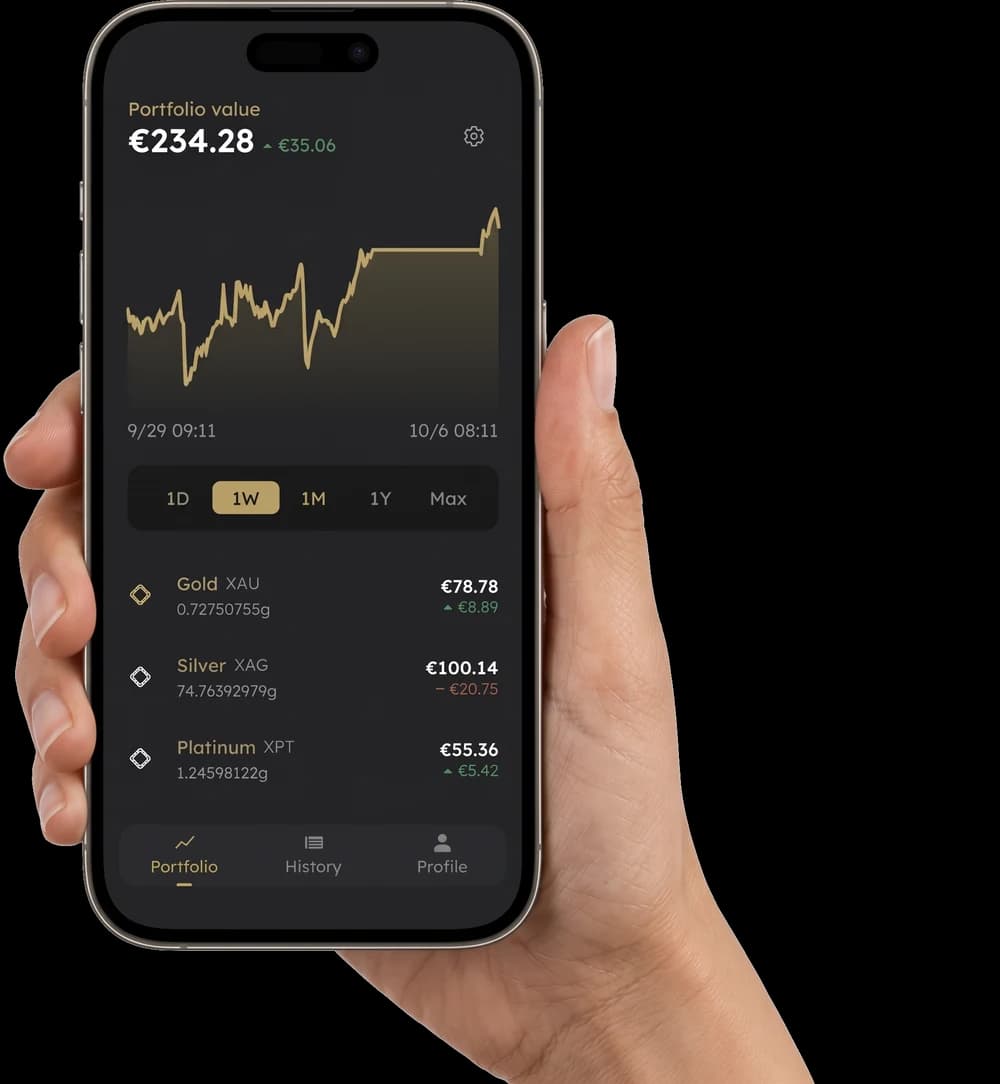
At Spargold, the logic is different. It is not about "storing it yourself and then optionally insuring it," but about physical precious metals that are professionally stored and insured. This is not an additional module, but part of the concept: precious metals are “insured in the duty-free warehouse”.
This noticeably changes the user reality. You do not have to continuously check whether your holdings still fit into basic coverage. You also do not have to decide whether you need additional insurance "now." The security framework is integrated from the start.
| Point | Classic Safe Deposit Box | Spargold |
|---|---|---|
| Insurance | often basic coverage, optional beyond that | insurance integrated into the storage solution |
| Cost Logic | safe deposit box fee plus annual additional premium if applicable | no separate "insurance contract step" necessary |
| User Effort | check coverage, adjust if necessary, document | security and storage process included in the product concept |
When gold stands at around 4,469.65 euros per ounce on 12.03.2026, "protection" quickly becomes a concrete magnitude. Especially then, it is helpful if the protection logic does not have to be managed on the side but is already included in the solution. Although inflation has recently been more moderate, asset protection remains a long-term issue – regardless of whether inflation is currently 1.9% or 2.1%.
A safe deposit box can be useful. But the insurance is often not automatically "full," but starts as a basis and becomes its own cost and decision block beyond that.
Spargold reverses this logic: You do not need separate additional safe deposit box insurance – because insurance for the professional storage of physical precious metals is conceptually part of it.
Stay farsighted
Yours, Helge Peter Ippensen