Gold & Silver hit ATHs: Why Crypto is Lagging Behind in the Trade War Era

January 20, 2026
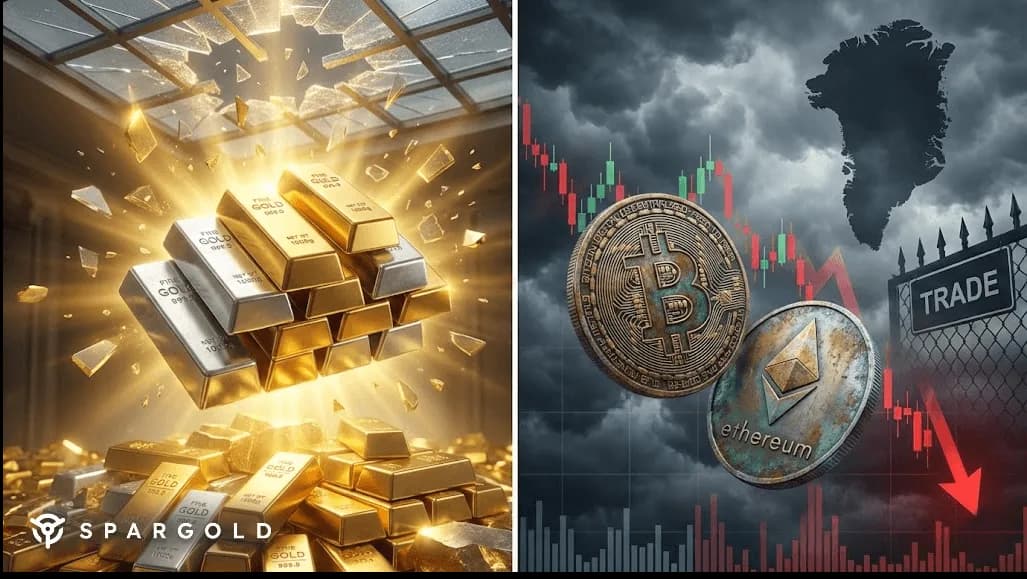
A glance at today's market boards is a revelation for anyone who declared the "old world" of finance dead two years ago. While the crypto community is still waiting for the promised moon landing, gold and silver have quietly left the stratosphere.
With gold prices exceeding $4,720 USD and silver scratching at the $95 mark, we are witnessing a historic repricing of tangible assets. But why are shiny metals massively outperforming digital assets like Bitcoin and Ethereum right now? The answer lies in an explosive cocktail of geopolitics, Donald Trump's renewed ambitions for Greenland, and a looming global trade war.
Nothing illustrates the current market situation better than raw numbers. Imagine you invested €100,000 in each of the four major assets exactly two years ago, in January 2024. The result today, in January 2026, is astonishing:
| Asset | Price Jan 2024 (approx.) | Price Jan 2026 (Today) | Value of 100k Portfolio Today |
|---|---|---|---|
| Silver 🥈 | €21.00 | €80.80 | ~ €384,760 |
| Gold 🥇 | €1,860 | €4,039 | ~ €217,150 |
| Bitcoin ₿ | €38,500 | €77,680 | ~ €201,760 |
| Ethereum ⟠ | €2,300 | €2,652 | ~ €115,300 |
Note: Historical prices are averages from Jan 2024. Current prices based on market data from Jan 20, 2026. Exchange rate fluctuations included.
The verdict is clear: Silver is the absolute winner, nearly quadrupling the initial investment. Gold has more than doubled and sits comfortably ahead of Bitcoin. Ethereum, on the other hand, is the cycle's underperformer, barely beating inflation.
Why are investors fleeing "Risk-On" assets like crypto and rushing into commodities? A key driver is the aggressive economic policy coming from the US. The renewed discussions about a purchase of Greenland by the Trump administration are more than just a curious headline. It is a signal: The race for strategic resources (rare earths, metals) is officially on.
When the world's largest economy considers territorial expansion to secure raw materials, it tells the market one thing above all: Physical scarcity is the theme of the decade.
Simultaneously, the global trade war is intensifying. New import tariffs of up to 60% on Asian goods and 20% on European products have shaken global supply chains. The result is classic stagflation:
In this environment, Bitcoin—which still behaves largely like a tech stock (Nasdaq correlation)—is deemed too risky for many institutional investors. Gold and silver, however, thrive in stagflationary phases as they carry no counterparty risk.
Yield curves are inverted, and industrial production in Europe is stuttering. Many indicators suggest we are heading into a hard recession in 2026. In times of crisis, liquidity and safety are king.
While Ethereum struggles with high transaction fees and declining network activity, and Bitcoin faces massive resistance at $90,000, silver offers a double floor: It is both monetary metal (protection against inflation) and an indispensable industrial metal (protection against scarcity).
The performance table doesn't lie. Those who bet on "Digital Gold" over the last two years made a decent return, but those who bet on real gold and silver hit the jackpot—and likely slept better at night.
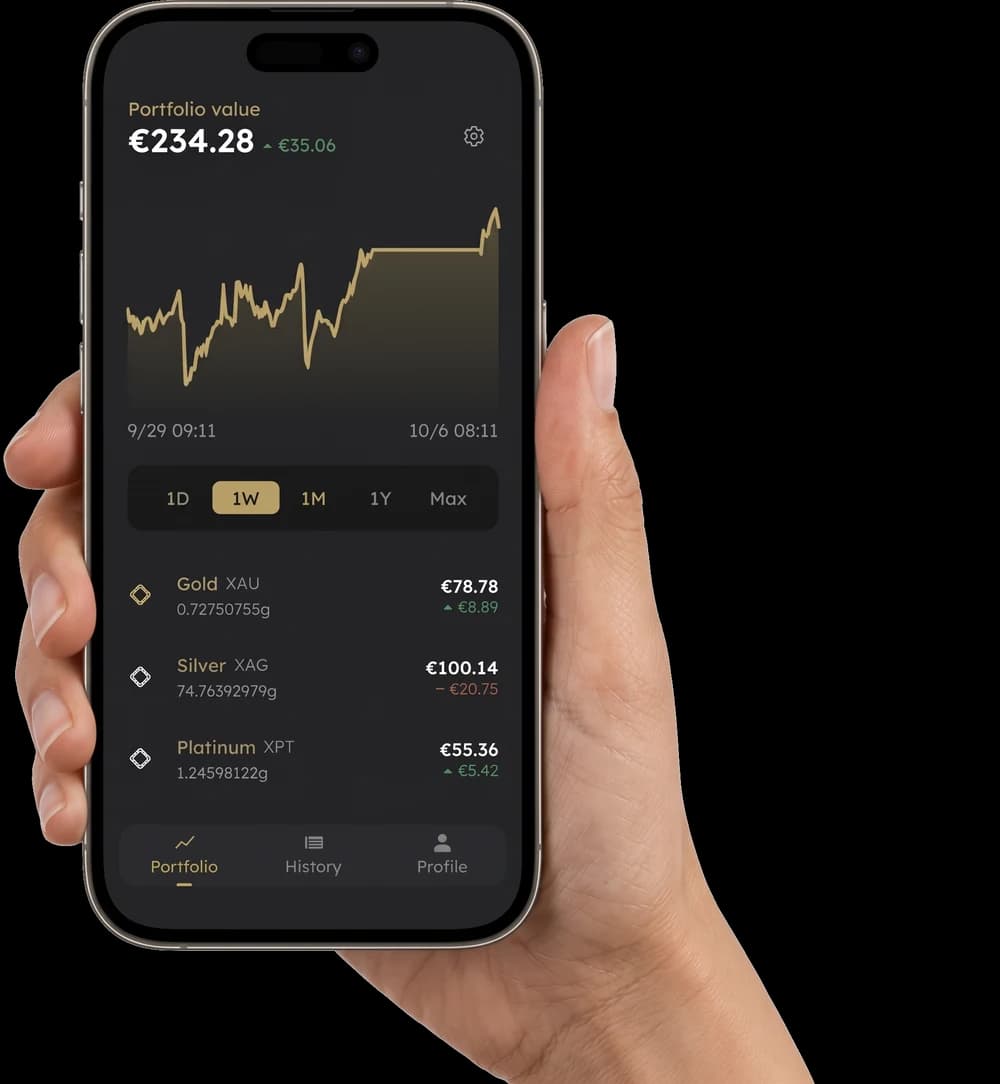
In a world where trade wars escalate and resources become a matter of national security, physical ownership belongs in every portfolio. Use the Spargold App to lock in profits from volatile assets and reallocate them into lasting value. Whether it's silver as a return turbo or gold as a rock in the storm: With just a few clicks, you can secure your share of the world's limited resources.
Stay farsighted
Yours, Nils Gregersen