

Throughout history, governments have repeatedly banned, restricted, or penalized the private trade and ownership of gold. As global economic pressures mount, economists are once again warning of a potential gold prohibition. But is such a ban realistic today, and how can investors effectively protect themselves?
What Does Gold Prohibition Actually Mean?
While the term "gold ban" is often used to instill fear, the specific regulations can vary. Generally, we distinguish between two levels of severity:
- Confiscation & Ban on Possession: Private individuals are legally obligated to sell their investment gold (bars and coins) to the state. In return, they receive compensation in paper currency at a government-fixed (often artificially low) rate. Jewelry and numismatic coins are usually exempt.
- Trade Prohibition: Possession remains legal, but private trade is banned. Dealers are prohibited from selling gold to, or buying gold from, private individuals. This effectively freezes the market.
Historical Gold Bans: A Look Back
Gold prohibitions are not conspiracy theories; they are historical facts. They have been implemented not only by authoritarian regimes but also by established democracies. The goal was almost always the same: to control the currency and prevent capital flight.
The USA and Executive Order 6102 (1933)
The most famous example is Executive Order 6102 issued by US President Franklin D. Roosevelt. In the midst of the Great Depression, US citizens had 14 days to surrender their gold to the Federal Reserve for $20.67 per ounce. Shortly thereafter, the government devalued the dollar and raised the gold price for international transactions to $35—a massive profit for the treasury at the expense of savers. The ban remained in effect until 1974.
Europe and Beyond
In the Weimar Republic, gold ownership was restricted as early as 1923. Under the Nazi regime, private gold ownership was criminalized. Similarly, the UK banned the possession of more than four gold coins in 1966 to protect the British Pound from devaluation.
| Country | Period | Context & Measures |
|---|---|---|
| Germany (Weimar) | from 1923 | Fight against hyperinflation; forced exchange of foreign currency and precious metals. |
| USA | 1933 – 1974 | Executive Order 6102. Prohibition of private gold ownership (except jewelry) to stabilize the Dollar. |
| Australia | 1959 – 1976 | Banking Act Part IV. Citizens had to exchange gold for paper currency to protect the national currency. |
| United Kingdom | 1966 – 1979 | Exchange Control Act. Ban on possessing more than 4 gold coins to support the Pound Sterling. |
| India | 1963 – 1990 | Gold Control Act. Strict regulation of ownership and trade to control the trade deficit. |
Scenarios: Why Would a New Ban Happen?
Historically, gold bans served to fix broken state finances. Scenarios that could trigger this today include:
- Sovereign Debt Crisis & Currency Collapse: If confidence in the Euro or USD collapses, people flee to hard assets. To stop this capital flight, the state could block the exit.
- Rise of CBDCs: Central Bank Digital Currencies allow for total surveillance. Gold is the natural enemy of this system and could be outlawed to force CBDC adoption.
- War Economy: In times of existential threats, states often seize citizens' assets to fund military efforts.
The Trade Trap and the Solution: Geographic Diversification
An often-overlooked risk is a B2C trade ban. If you can no longer legally sell your gold and cross-border export is prohibited, your wealth is trapped. The local value would plummet as there are no legal buyers, leaving only the risky black market.
Why Storage Outside the EU is Essential
To avoid this trap, experts recommend a strategy of geographic diversification:
- Storage Outside the EU: It is advisable to store a significant portion of your gold holdings outside the direct jurisdiction of the EU (e.g., in Switzerland, Liechtenstein, or Singapore). An EU-wide gold ban or capital controls would not immediately apply there. If trade is banned within the EU, your gold abroad remains tradable and liquid.
- Only "Emergency Stock" at Home: You should only store small amounts at home—think of it as an emergency fund. Small denominations (e.g., 1/10 ounce coins or recognized bullion coins) are suitable for this, serving as a means of exchange in a crisis. Storing large quantities at home not only increases theft risk but also makes you vulnerable during potential house searches in the event of a ban.
Conclusion: Gold Remains the Ultimate Insurance
A gold prohibition is the "worst-case scenario." But precisely because gold is difficult for the state to access, it remains one of the most important forms of wealth insurance. Those who own physical gold—ideally geographically diversified—hold value outside the banking system.
At Spargold, we believe in the freedom of trade, but history teaches us that preparation is everything. The COVID-19 response showed us how rapidly the government can restrict civil rights in a crisis. In this context, restrictions on the gold trade are not entirely inconceivable, particularly as such measures would affect only a minority of the population.
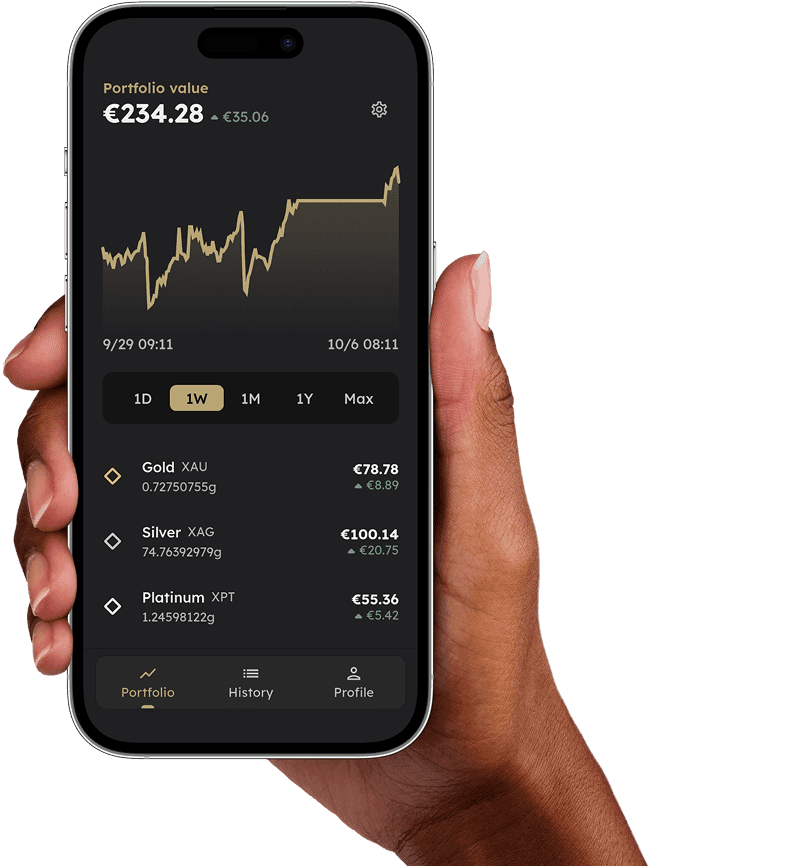
Use the time of freedom to crisis-proof your portfolio. Through our app, we offer secure access to precious metals, stored outside the EU, starting from 5 EUR—a sensible addition for anyone looking to protect their wealth in the long run.
Stay forward-thinking
Your Nils Gregersen