Spot Price, Fixing & Futures Market – How is the Gold Price Really Determined?

January 8, 2026
Spot Price, Fixing & Futures Market – How is the Gold Price Really Determined?
What is the spot price of gold? How does it differ from fixing and
the futures market? A clear explanation of gold price formation.
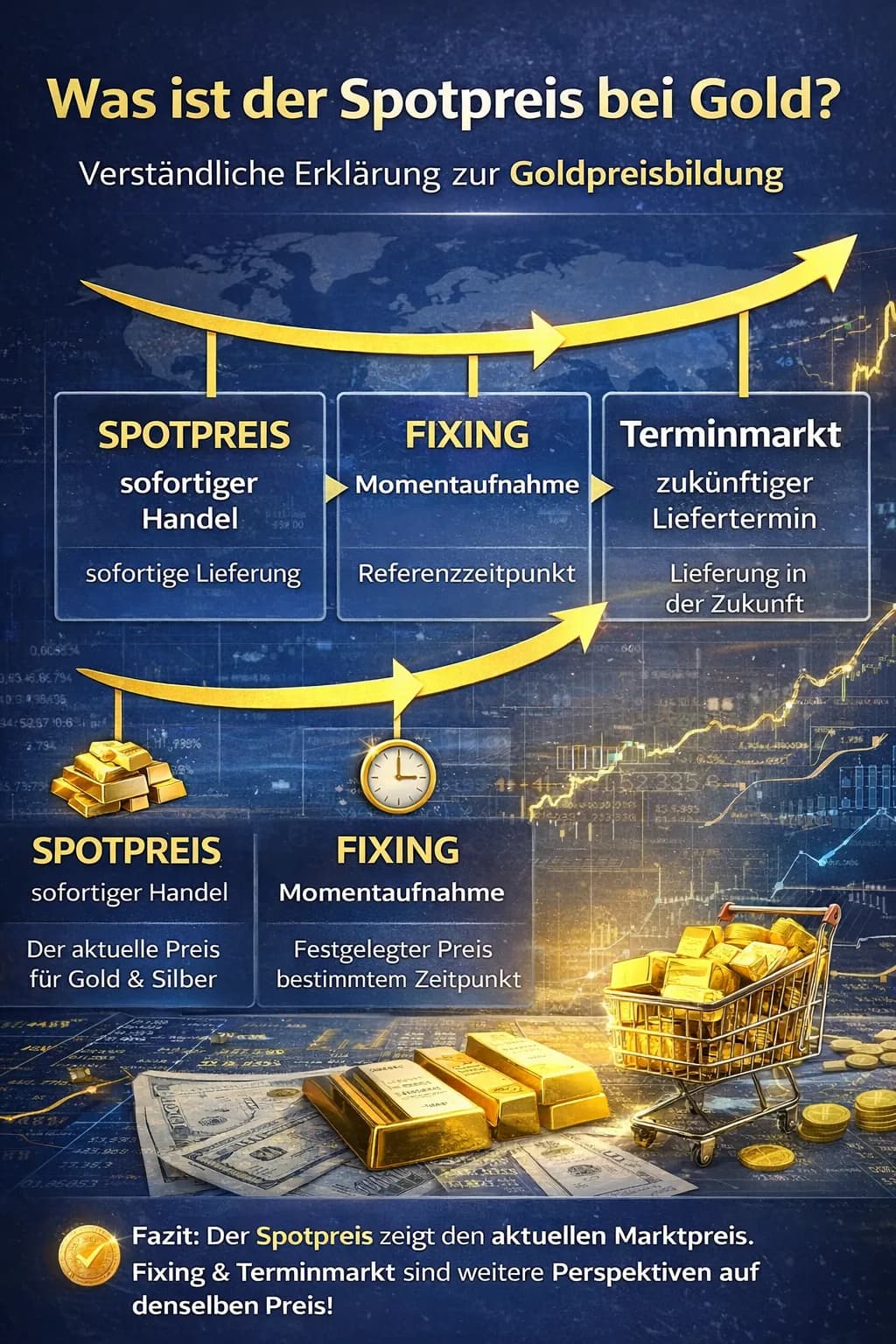
Anyone dealing with gold or silver quickly encounters three terms: spot price, fixing, and futures market price. At first glance, they appear to be different prices – in fact, however, they describe the same market price from different perspectives.
The spot price is the central reference price. It shows the price at which gold or silver is traded now for immediate delivery. This price is continuously generated by supply and demand in global trade – both in the physical market and at highly liquid trading venues.
Fixing, on the other hand, is not a separate market, but a point in time. Historically – for example, with the London Gold Fixing – a reference price was determined at fixed times, to which contracts, settlements, and valuations could refer. Fixing is therefore a snapshot, not a permanently different price.
The futures market does not trade the metal itself, but time. On exchanges such as COMEX, prices for future delivery dates are formed. These reflect expectations, hedging strategies, and market opinions – and in turn influence the spot price.
Conclusion:
There are not three different gold prices.
There is one market price, viewed from different perspectives.