“Gold is the New Bitcoin” – Does This Really Mean Gold is Now Exploding Like Crypto?

January 19, 2026
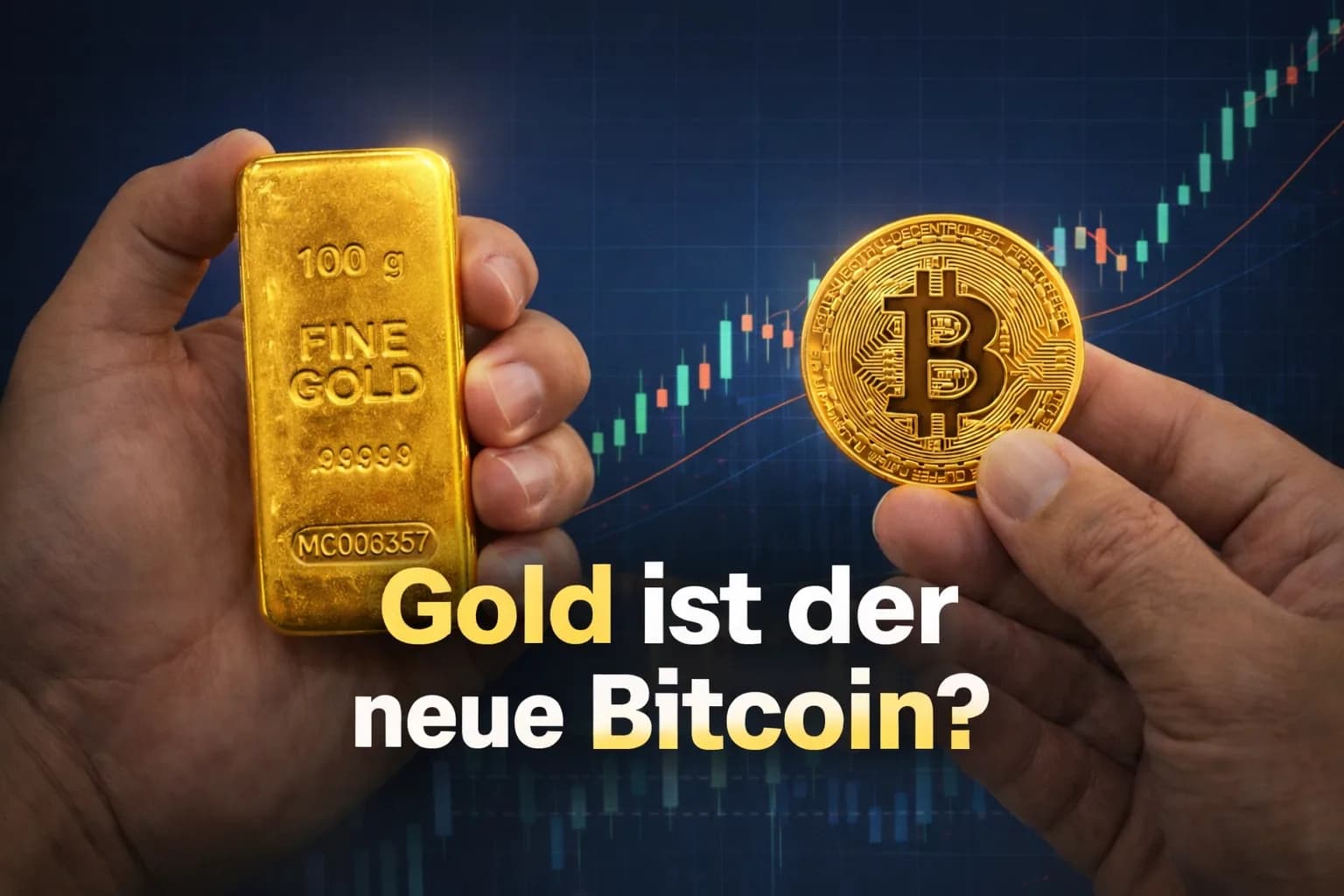
The phrase “Gold is the new Bitcoin” has been appearing with striking frequency in recent weeks. It usually implies that gold could achieve similarly strong value increases as many know from Bitcoin in previous cycles. The idea seems plausible because gold has indeed entered a phase where it no longer behaves like the “slow” store of value of the past, but rather like an asset with momentum.
In mid-January 2026 alone, gold was described in several reports with prices above 4,600 US dollars per troy ounce; Reuters even reported a record high of 4,629.94 US dollars. Fortune quoted the price on January 16, 2026, at approximately 4,597 US dollars per troy ounce. In parallel, Bitcoin is currently trading around 95,092 US dollars.
This is the perfect stage for a catchy thesis. However, whether gold becomes “like Bitcoin” depends on exactly what is being compared: return potential, volatility, narrative, or function within the portfolio.
The term is primarily a reflection of sentiment: gold is no longer perceived merely as crisis insurance, but as an asset that can gain significantly in a short period. Reuters reports that gold rose by around 64 percent in 2025 and was already up by more than 6 percent in 2026. Such figures feel “crypto-like” to many investors because they are of a magnitude rarely seen in gold for a long time.
Furthermore, a portion of capital flows now functions more like those in tech or crypto markets: fast, narrative-driven, global. In 2025, gold-backed ETFs recorded record-high inflows of 89 billion US dollars, according to Reuters. When an asset can be “bought” so heavily through institutional products, it often significantly accelerates movements.
The statement “Gold is the new Bitcoin” is often formulated based on returns. This is understandable, but also reductive. Historically, Bitcoin is known for extreme upward phases, which are regularly accompanied by deep drawdowns. Gold can also rise sharply but typically behaves differently: less erratic, often more closely linked to monetary policy, real interest rates, the dollar, and geopolitical risk premiums.
Nevertheless, a sober look at the most recent, publicly reported key data is worthwhile:
| Metric | Gold | Bitcoin |
|---|---|---|
| Current Price (Mid-Jan 2026, rounded) | approx. 4,597–4,630 USD per troy ounce | approx. 95,092 USD |
| Performance 2025 (mentioned in reports) | approx. +64% | 2025 significantly weaker/partly negative in annual reviews |
| Start of Year 2026 (Reports) | over +6% | approx. +9% YTD (media report) |
This comparison shows: Gold has recently delivered a return profile that has surprised many. At the same time, Bitcoin remains the more volatile asset, whose movements can depend heavily on regulation, risk appetite, and tech liquidity.
The biggest misconception arises when similar price movements lead to conclusions of similar mechanics. Both assets are scarce, globally tradable, and emotionally charged. However, they differ in ownership, infrastructure, risk sources, and their role in the financial system.
| Dimension | Gold | Bitcoin |
|---|---|---|
| History and Acceptance | Millennia as a store of value, deeply anchored in the central bank and jewelry markets | Since 2009, high acceptance in crypto ecosystems, but more strongly influenced by political/regulatory factors |
| Main Drivers | Geopolitics, real interest rates, dollar, central bank purchases, ETF flows | Risk appetite, liquidity, regulation, technology and network dynamics |
| Structure of Demand | Central banks have been structural buyers for years | Demand more investor/market-driven, dependent on exchanges, custody, and sentiment |
| Risks | Storage/insurance, spreads on physical purchases, political interventions are possible | Technology risks, regulatory interventions, exchange/custody risks; debates over long-term crypto security are increasing |
| “Narrative” | Physical, non-digital anchor in crises | Digital “scarcity” store of value with a strong innovation narrative |
The risk component is particularly important because it explains why some market voices are currently explicitly bringing gold into play as an alternative to Bitcoin. A recent example: a Jefferies strategist justified a reallocation away from Bitcoin toward gold, citing, among other things, long-term cryptographic risks posed by quantum computing. One does not have to agree with this, but it shows how narratives can shift.
When gold price movements suddenly become large, it usually has several simultaneous causes. Reuters cites geopolitical tensions and expectations of a looser US monetary policy as drivers. Added to this is a structural foundation: central banks continue to expand reserves, and the World Gold Council reports sustained buying momentum from individual central banks for late 2025/early 2026.
The interplay of geopolitical risk, the monetary policy narrative, and massive “buyability” via ETFs creates a momentum that many previously associated more with Bitcoin: rapid capital rotation, strong headlines, high attention.
This is exactly where the thesis becomes dangerously reductive. Recent strength does not guarantee future “crypto returns.” Gold may continue to rise, but it could also consolidate if risks diminish, real interest rates rise, or the dollar reverses. Even Reuters points out in its reporting that forecasts vary widely and that pullbacks are possible after strong movements.
The most meaningful core of the statement is therefore not “Gold will explode like Bitcoin,” but rather: Gold is currently being perceived by many investors as a strategic store of value again, and with an intensity we haven't seen for a long time. This explains why the comparison arises in the first place.
Anyone hearing the phrase “Gold is the new Bitcoin” can use it as a reminder to examine their own assumptions: Is it about returns, risk, liquidity, or hedging against political and monetary policy disruptions? Gold and Bitcoin can tell similar stories, but they do so with different mechanics and different risk profiles.
When markets become turbulent, it is often not a question of “which asset rises the most,” but “which behavior helps me stay calmer.” This is precisely why tangible assets remain a topic of conversation – and why gold is currently being discussed so emotionally again.
Stay farsighted
Yours, Helge Peter Ippensen